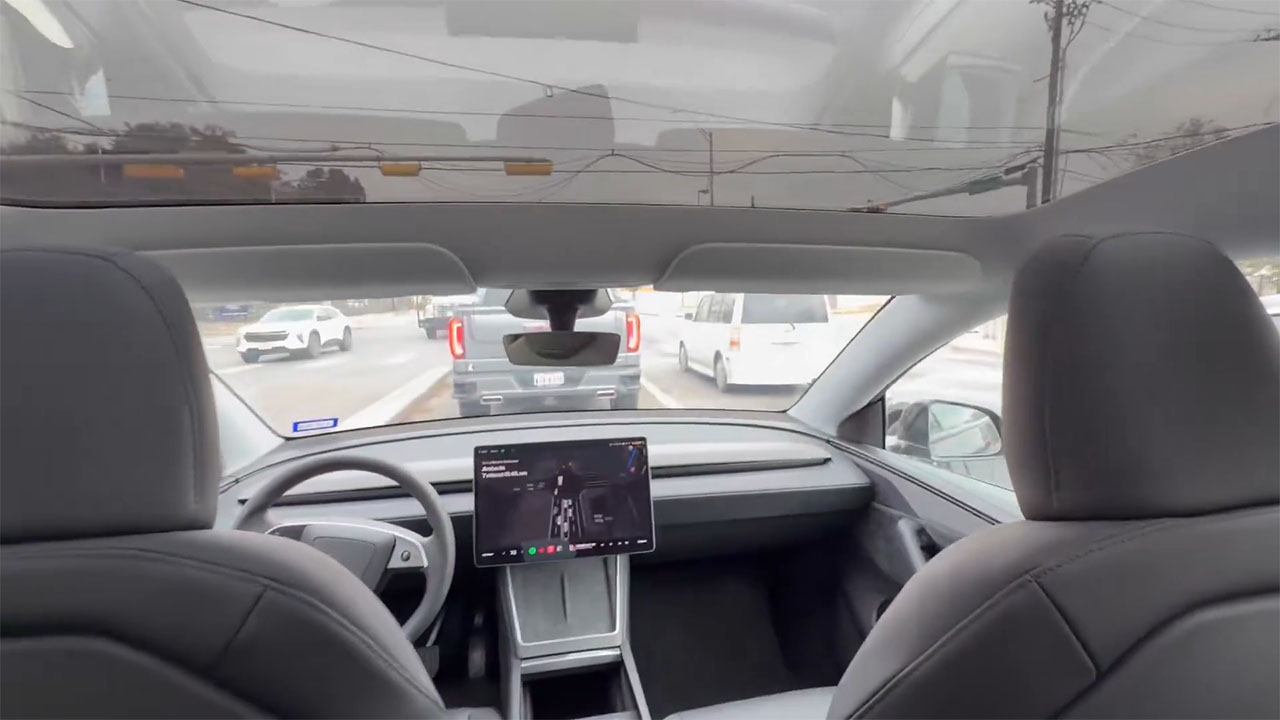
In a move that shifts the industry from cautious testing to commercial deployment, Tesla has launched its first fully driverless ride-hailing service for the public. The company has begun operating its Robotaxi service in Austin, Texas, with vehicles navigating city streets using Full Self-Driving (FSD) software without a human safety driver behind the wheel. This landmark step, confirmed by user-shared video from the backseat of a Model Y "Juniper" taxi, marks the most aggressive push yet by a major automaker to bring unsupervised autonomous driving to a metropolitan market.
The Austin Deployment: A Geofenced Leap Forward
The initial service is operating within a large, geofenced area in Austin, a city familiar to Tesla's autonomous systems after years of data collection and testing. The vehicles in use are specially designated Model Y Juniper Robotaxis, a refreshed model reportedly equipped with the latest suite of sensors and the company's most advanced AI driving computer. User footage shows the vehicle's tablet display indicating an autonomous route, with the steering wheel moving autonomously through intersections, lane changes, and pick-up/drop-off maneuvers. This controlled but real-world launch serves as the first true stress test of Tesla's "vision-only" FSD system in a revenue-generating, point-to-point service model.
Navigating the Regulatory and Technical Frontier
Launching without safety monitors is a bold statement of confidence that places Tesla at the center of an intense regulatory and technical debate. While other companies like Waymo and Cruise have deployed driverless vehicles, Tesla's approach relies solely on cameras and AI, avoiding more expensive lidar systems used by its rivals. The unsupervised FSD operation in Austin suggests Tesla has satisfied key regulatory hurdles in Texas, a state with relatively permissive laws regarding autonomous vehicles. However, the success of this expansion hinges on the system's consistent performance across millions of unpredictable urban driving scenarios, where the margin for error is effectively zero.
The commercial implications are profound. By removing the human driver, Tesla fundamentally alters the cost structure of ride-hailing, aiming for profitability that has eluded companies like Uber and Lyft. Every successful, unsupervised trip generates valuable data to further refine the FSD algorithm, creating a virtuous cycle of improvement. Yet, this is a high-stakes gambit; any significant safety incident within the geofenced zone could trigger public backlash and regulatory scrutiny that slows or halts the entire Robotaxi initiative.
Implications for Owners and Investors
For Tesla owners, the Austin launch is a tangible preview of the potential value locked within their own vehicles. It validates Elon Musk's long-stated vision of turning privately owned Teslas into income-generating assets when added to a future shared network. For investors, the move is a direct play on Tesla's valuation as an AI and robotics company, not just a carmaker. Successful scaling in Austin could pave the way for rapid expansion to other pre-mapped cities, unlocking a massive new revenue stream. However, stakeholders should monitor the service's safety metrics, customer adoption rates, and regulatory responses closely, as these will be the true determinants of whether Tesla's driverless dream can achieve sustainable, global scale.