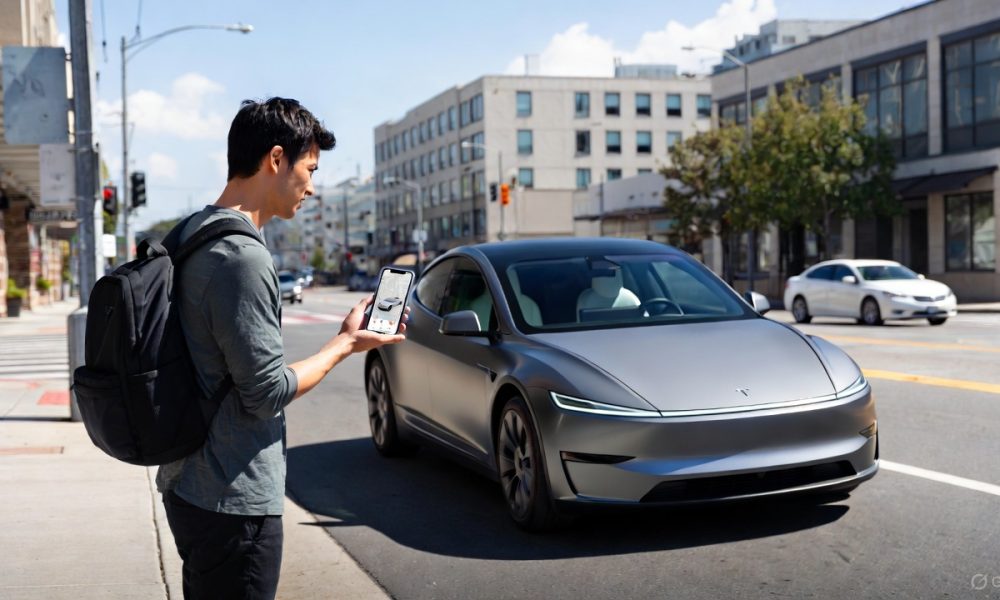
For a select group of riders in Austin, the long-promised future of autonomous transportation arrived last week, not with a triumphant fanfare, but with a sobering dose of reality. Tesla officially removed the human Safety Monitor from a portion of its Robotaxi fleet, offering a glimpse into a driverless future. However, early reports from those who experienced the unsupervised rides reveal a jarring gap between ambition and execution, highlighting the immense difficulty of deploying a truly autonomous ride-hailing service.
A Bumpy Ride Into Autonomy
Participants who secured a ride in the unsupervised vehicles described an experience fraught with hesitation and confusion. Unlike the smooth, confident drives often showcased in promotional videos, these early Robotaxi trips were marked by frequent "phantom braking" events, unnerving stops at harmless obstacles, and a palpable inability to handle complex or unexpected road scenarios. The absence of a human safety driver transformed minor software uncertainties into significant passenger anxieties, underscoring that the vehicle's Full Self-Driving (FSD) software, while advanced, is not yet a mature replacement for human oversight in all conditions.
The Safety Monitor's Unseen Role
This experiment starkly illustrates the critical, often understated role the Safety Monitor played. That human wasn't just a fail-safe for catastrophic errors; they provided subtle interventions for edge cases, navigated ambiguous social interactions with other drivers, and offered passengers a psychological comfort blanket. Their removal exposes the AI driver to the unfiltered chaos of real-world roads, where construction zones, erratic pedestrians, and unusual traffic patterns demand a level of adaptive reasoning and confidence that the current system appears to lack. The difficulty isn't merely technical—it's about replicating human judgment and reassurance.
The challenges reported in Austin have direct implications for Tesla's aggressive timeline. CEO Elon Musk has repeatedly predicted a massive rollout of unsupervised Robotaxis, a cornerstone of the company's valuation thesis that frames each Tesla as a potential revenue-generating asset. These early, difficult rides suggest that scaling this technology from a limited test to a reliable, city-wide service will be a far more iterative and time-intensive process than perhaps previously communicated. It moves the goalpost from simply removing the driver to ensuring the autonomous system can manage millions of unique scenarios with near-perfect reliability.
For Tesla owners and investors, these reports are a crucial data point. They signal that the appreciable value of the Robotaxi network remains on the distant horizon, dependent on solving a profound challenge in artificial intelligence. Owners anticipating near-term returns from their vehicle as an autonomous ride-hailing asset may need to recalibrate expectations. For investors, it underscores the high-risk, high-reward nature of betting on Tesla's AI prowess over its already dominant EV manufacturing. The company's ability to rapidly iterate and solve these hard problems will ultimately determine if its cars become transportation appliances or truly autonomous economic machines.