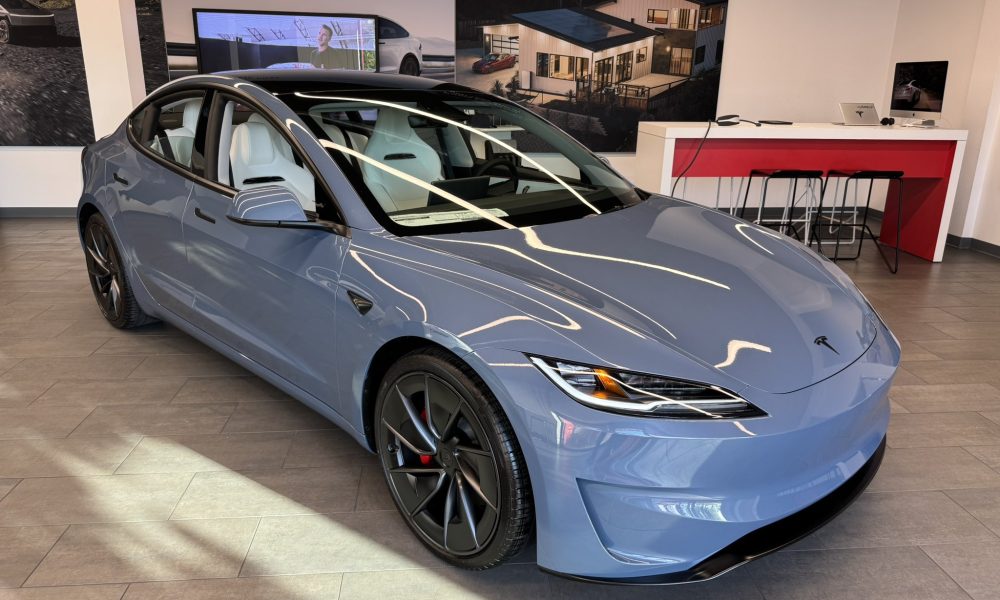
For nearly six years, the Tesla Model 3 has been the undisputed benchmark in China's premium electric sedan arena, a symbol of EV aspiration and technological prowess. That era has now definitively ended. In a seismic shift that underscores the ferocious intensity of the world's largest auto market, smartphone giant Xiaomi has dethroned the American icon. Data from the China Passenger Car Association (CPCA) reveals that Xiaomi delivered 258,164 units of its SU7 sedan in 2025, decisively outselling the Tesla Model 3, which recorded 200,361 deliveries in the same period.
A New Challenger Emerges from an Unlikely Arena
Xiaomi's ascent is not merely a story of another automaker gaining ground; it represents a fundamental reshaping of competitive boundaries. The company leveraged its deep expertise in consumer electronics, smart ecosystems, and hyper-aggressive marketing to launch the SU7 with remarkable speed. Its strategy of offering cutting-edge connectivity, a sleek design, and a highly competitive price point—often undercutting the Model 3—resonated powerfully with a tech-savvy Chinese consumer base. This victory proves that in the modern electric vehicle wars, software integration and brand ecosystem loyalty can be as critical as traditional automotive engineering.
Contextualizing Tesla's Challenging Year in China
Xiaomi's landmark achievement did not occur in a vacuum. It comes on the heels of confirmed reports that Tesla experienced its first year of domestic sales decline in China, a market crucial to its global margins. While Tesla remains a colossal force, factors such as an aging Model 3 design, increased competition across all EV segments, and the formidable appeal of local brands like BYD and now Xiaomi have applied relentless pressure. The CPCA data is the clearest metric yet of that pressure translating into a lost leadership position in a core segment, confirming that the "writing was on the wall."
The implications of this shift are profound for both companies and the market at large. For Xiaomi, the SU7's success validates its multi-billion-dollar automotive bet and establishes it as a serious, scalable automaker overnight. For the broader industry, it signals that the barriers to entry are lower for tech firms with strong capital and software talent, potentially inviting more cross-sector competition. The battleground has expanded from range and acceleration to seamless AI integration, lifestyle branding, and the constant iteration familiar to the smartphone world.
For Tesla owners and investors, this news is a stark reminder that market leadership is never guaranteed. It increases the urgency for Tesla's promised refresh of the Model 3 and Model Y, alongside more affordable future models, to reinvigorate its lineup. Investors will watch closely for Tesla's strategic response in pricing, feature updates, and its own ecosystem development to reclaim momentum. While Tesla's brand strength and global footprint remain immense, its strategy in China—a market that often rewards localized innovation and aggressive pricing—may require significant recalibration to meet this new generation of integrated, tech-first rivals.