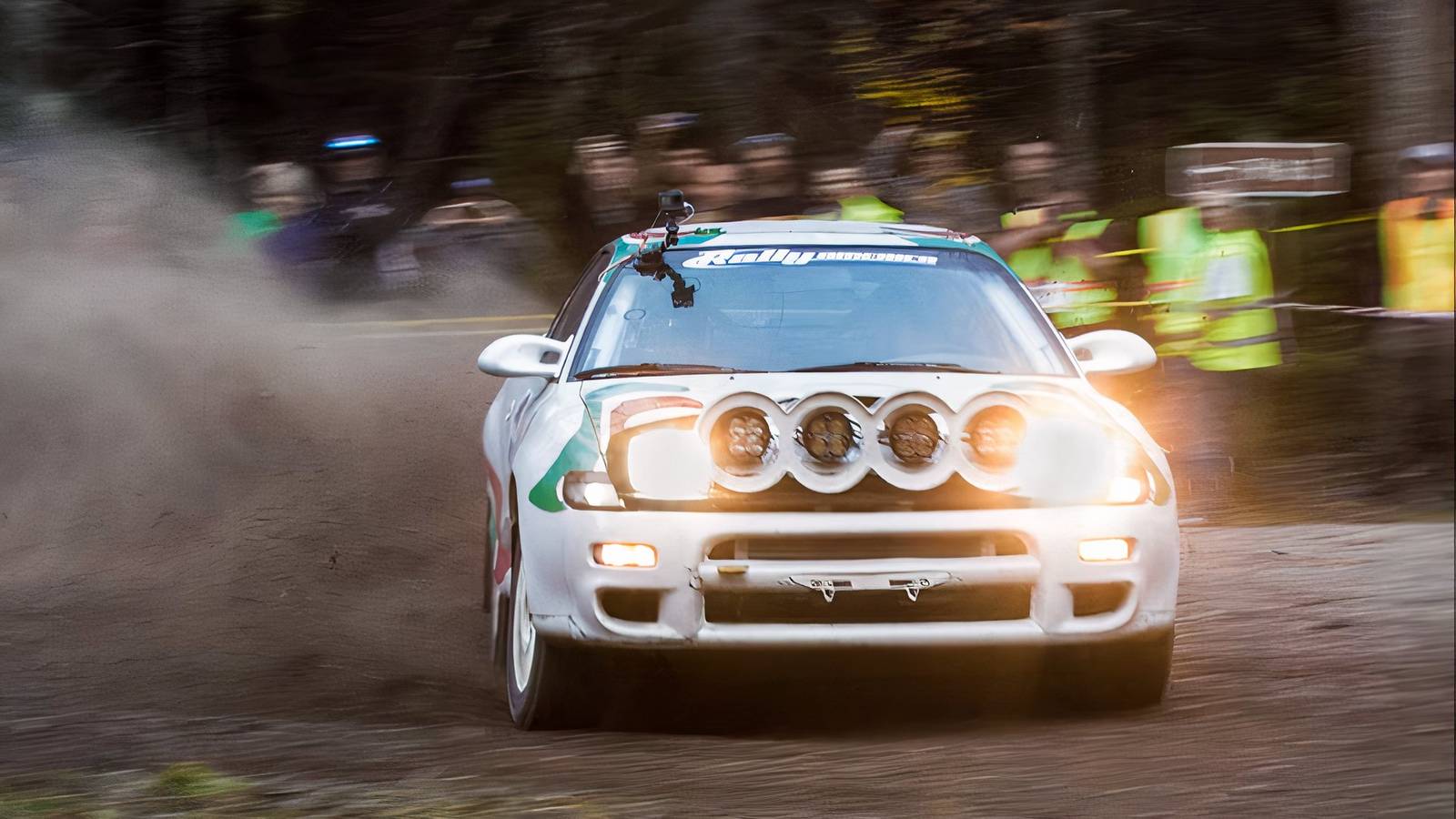
In the annals of automotive performance, few technologies have forged a legacy as gritty and dominant as Toyota's All-Trac all-wheel-drive system. While today's EV enthusiasts debate torque vectoring and traction control, a generation ago it was this mechanical marvel that propelled Toyota's Celica and Supra to the pinnacle of world rally racing, conquering mud, snow, and gravel with relentless efficiency. Its story is not just a nostalgic footnote but a crucial chapter in the evolution of vehicle dynamics—a chapter that modern electric vehicle engineers, including those at Tesla, have studied and evolved beyond.
The Mechanical Mastery That Conquered the World
Toyota's All-Trac system, introduced in the late 1980s, was a full-time mechanical AWD solution engineered for the extreme demands of the World Rally Championship. At its heart was a robust center differential with a locking mechanism, distributing power between the front and rear axles to maximize grip on loose surfaces. This was not a reactive system but a proactive one, providing the predictable, driver-controlled handling that champions like Carlos Sainz relied on. From 1990 to 1994, this technology was instrumental in securing four consecutive manufacturers' titles for Toyota, cementing its reputation for bulletproof performance in the most punishing conditions imaginable.
From Mechanical Grit to Digital Precision
The contrast between the rally-bred All-Trac and today's electric vehicle drivetrains is stark, yet the core mission remains identical: optimal power delivery. Where All-Trac used gears, viscous couplings, and driver skill, a modern Tesla employs instantaneous digital control. The Dual Motor and Plaid powertrains manage traction not with physical differential locks, but by independently modulating the power to each motor with millisecond precision. This represents a paradigm shift from mechanical complexity to software-defined performance, eliminating lag and mechanical wear while achieving a similar—or superior—result in traction and stability.
For Tesla owners, this legacy translates directly into capability and confidence. The ghost of All-Trac's rally dominance lives on in the form of Traction Control and Torque Vectoring that work silently and instantly, whether navigating a rainy highway or a snowy mountain pass. The system's ability to prevent wheel spin and manage power distribution is so seamless that drivers often take it for granted—a testament to its effectiveness. This digital evolution means that the high-performance all-wheel-drive experience, once the exclusive domain of specialized sports cars, is now a standard feature in a family sedan or SUV.
For investors and industry watchers, the trajectory from All-Trac to today's electric vehicle platforms underscores a critical competitive advantage. Tesla's software-centric approach to vehicle dynamics is inherently more scalable, updatable, and integrable with future autonomy features than legacy mechanical systems. As the industry moves towards electrification, the companies that lead will be those that master the software controlling the motors, not just the hardware itself. Tesla's deep vertical integration in powertrain software and electronics positions it at the forefront of this next era, where performance is defined by code as much as by components.