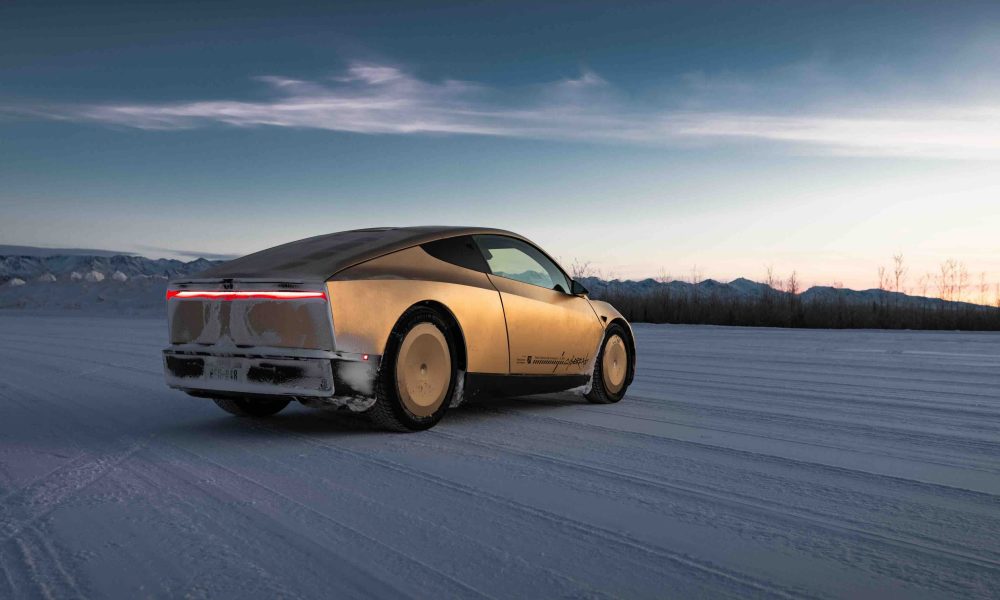
As the race for autonomous ride-hailing intensifies, Tesla is putting its most anticipated vehicle through one of its toughest trials yet. Prototypes of the futuristic Tesla Cybercab have been spotted undergoing rigorous winter testing in Alaska, a critical step in validating the robotaxi's performance in extreme conditions. This development comes as CEO Elon Musk recently reaffirmed the ambitious production start target, signaling the company's confidence in moving from concept to commercial reality.
Musk Doubles Down on Timeline Amid Real-World Validation
In a recent post on his social media platform X, Elon Musk stood by the previously announced schedule for the robotaxi's rollout. While he did not specify a new date, his reinforcement of the timeline is a strategic move to maintain market and investor focus on Tesla's autonomous future. This verbal commitment is now being matched with tangible engineering progress. The decision to test in Alaska's harsh environment is not incidental; it directly addresses one of the core challenges for any self-driving system: reliably interpreting sensor data through snow, ice, low traction, and obscured lane markings.
Winter Testing: The Ultimate Proving Ground for Autonomy
The move to Alaska provides crucial, real-world data that simulations cannot fully replicate. For the Cybercab to operate as a global, 24/7 service, its suite of cameras and sensors must perform flawlessly in blizzard conditions where visibility is near zero. This phase tests not only the vehicle's perception stack but also its mechanical resilience—including battery performance in sub-freezing temperatures and the durability of its presumed stainless-steel exoskeleton. Success here would mark a significant technological leap, potentially giving Tesla a formidable edge over competitors whose autonomous systems are primarily developed in milder climates.
This testing phase is a clear indicator that Tesla is advancing into the later stages of the EV development cycle for the robotaxi. Moving from design studios and warm-weather tracks to the unpredictable roads of Alaska demonstrates a transition toward validation and refinement. It answers growing skepticism about the project's viability with concrete action, showing that the Cybercab is being engineered for the complexities of the real world, not just the controlled environment of a product launch event.
For Tesla owners and investors, these parallel developments—executive timeline reinforcement and aggressive real-world testing—carry substantial implications. A successful robotaxi deployment represents a potential trillion-dollar opportunity, fundamentally shifting Tesla's valuation from a car company to a mobility-as-a-service platform. For owners, it previews a future where their own vehicles could potentially join an autonomous network, generating revenue. However, the stakes are equally high; any significant delay or technological shortcoming revealed in tests like these could impact investor confidence and underscore the immense difficulty of achieving full, unsupervised autonomy.