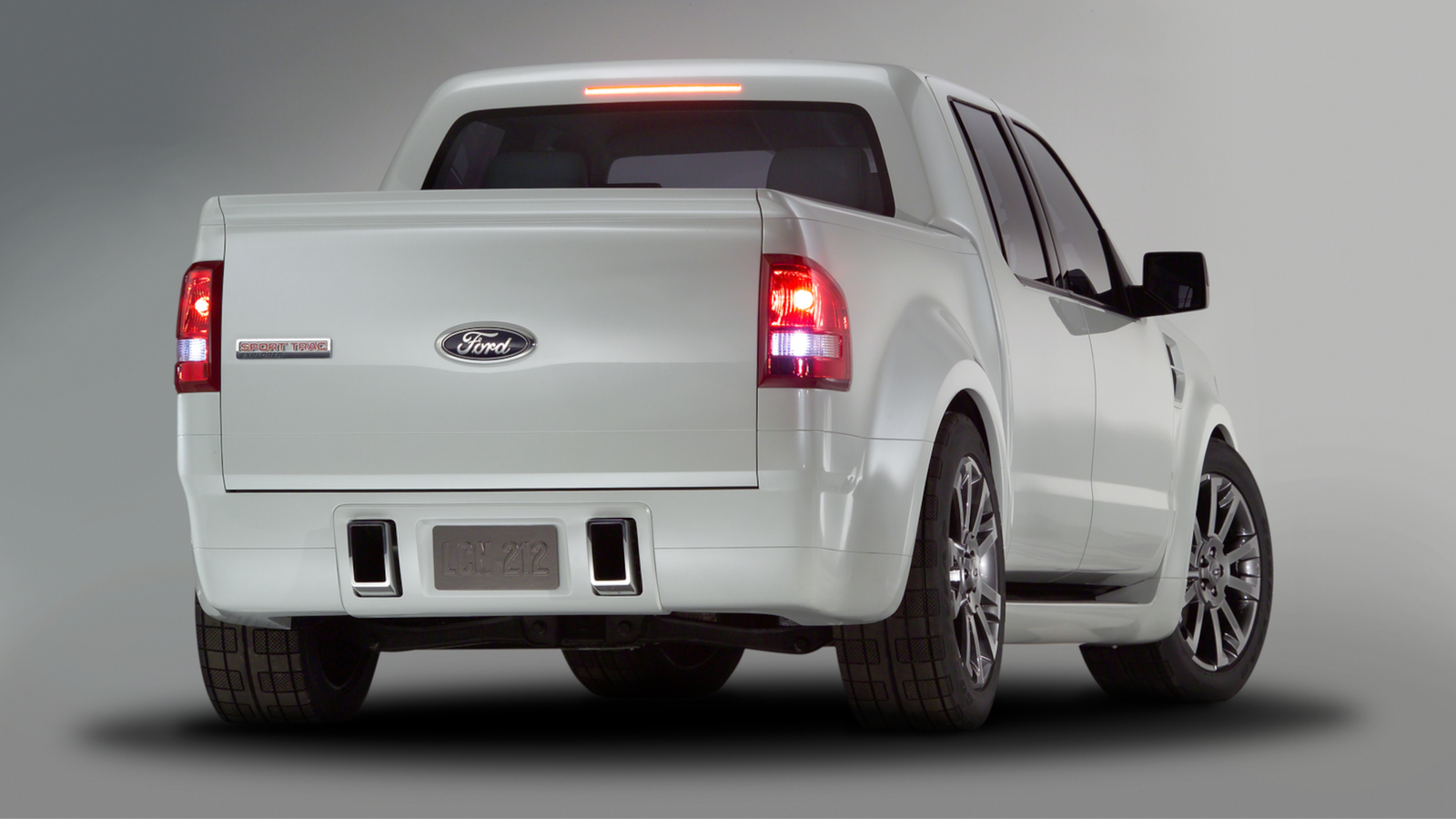
In the high-stakes arena of electric vehicles, where six-figure price tags and triple-digit horsepower figures are increasingly common, a relic from a different automotive era is quietly causing a stir. The Ford Ranger FX4 Level II, a limited-production sport truck from the early 2000s, is now emerging as a cult classic, with clean examples often trading hands for around $10,000. For that price, you get a bona fide 300-horsepower V8 and a rugged, off-road-ready package—a proposition that stands in stark contrast to today's market. This rediscovery raises pointed questions about value, performance, and the evolving definition of a "sport truck" in the age of instant torque and silent powertrains.
The FX4 Level II: A Niche Legend Resurfaces
Produced for only the 2003 and 2004 model years, the Ranger FX4 Level II was Ford's factory-built answer to enthusiasts wanting a compact, no-nonsense performance truck. It wasn't just a trim package; it was a specialized vehicle featuring a 4.0L V6 engine that was sent to Ford's Special Vehicle Team (SVT) for a heart transplant. Engineers installed a 5.0L V8 from the Explorer, bumping output to a robust 300 hp. Coupled with a reinforced frame, a bespoke Bilstein suspension, and unique cast aluminum wheels, it was a parts-bin special executed with purpose. Today, its analog driving experience and mechanical simplicity are attracting collectors and driving its value upward, presenting a fascinating counter-narrative to modern vehicle complexity and depreciation.
Contextualizing the $10,000 Performance Proposition
The caveats, however, are significant. This is a 20-year-old vehicle with the maintenance needs and fuel economy (or lack thereof) of its era. The $10,000 price is an entry point, not a total cost of ownership. Meanwhile, the contemporary EV landscape, dominated by Tesla, offers a completely different value calculus. For a similar total cost of ownership over five years, one could be driving a used Tesla Model 3, which would deliver superior technology, negligible "fuel" costs, and performance that likely surpasses the Ranger's in daily driving. The comparison isn't about which is objectively better, but about what the market now defines as performance and value: raw, visceral combustion versus refined, efficient electric acceleration.
Implications for Tesla Owners and Investors
For Tesla owners and investors, the FX4 Level II's story is less about competition and more about market maturation. It underscores a bifurcation in the automotive world. On one side, the forward march of software-defined electric vehicles like Tesla continues to reset expectations for performance, running costs, and technology. On the other, a growing segment of enthusiasts is placing value on analog, ICE-powered experiences, creating a robust secondary market for special vehicles. This trend suggests that while the new vehicle market will continue its rapid electrification, the used and collector markets will evolve separately, preserving ICE icons. For Tesla, it reinforces that its true competition isn't found in 20-year-old trucks, but in its ability to continuously make new EV technology so compelling that it overshadows the nostalgic allure of the past.