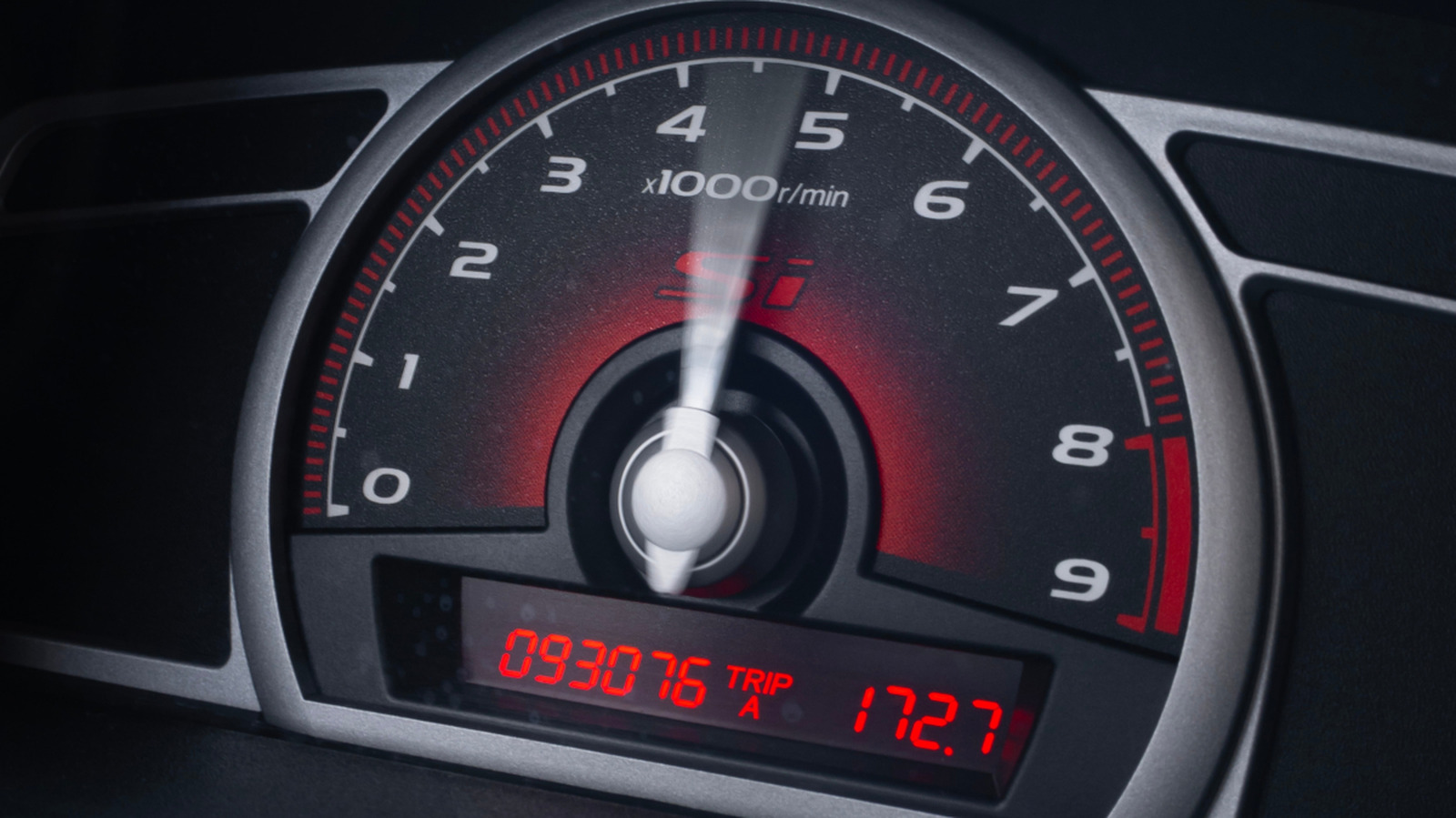
For over a century, the tachometer's steady climb has been the universal language of acceleration, a smooth mechanical symphony conducted by the driver's right foot. In the electric vehicle era, this relationship is fundamentally different, yet the principle remains: power delivery should be predictable. When a vehicle's RPM become erratic—surging, dropping, or fluctuating unexpectedly—it signals an interruption in that critical dialogue between command and execution. While Tesla vehicles, with their simplified electric drivetrains, sidestep many classic internal combustion pitfalls, understanding these anomalies remains crucial for diagnosing issues and appreciating EV design superiority.
The Combustion Conundrum: Classic Causes of Erratic RPM
In traditional vehicles, unsteady RPM are often a symptom of mechanical or fuel system distress. A failing mass airflow sensor can send incorrect data to the engine computer, causing it to miscalculate the air-fuel mixture and resulting in rough idle or hesitation. Similarly, a clogged fuel injector or weak fuel pump starves the engine of petrol, leading to power stutters as RPM struggle to rise. Perhaps the most common culprit is a faulty ignition system; worn spark plugs or a failing coil pack cause misfires, where fuel fails to ignite in a cylinder, creating a palpable jerk and RPM drop. These issues highlight the complexity of maintaining precise mechanical harmony across hundreds of explosions per minute.
Beyond the Engine: Transmission and Sensor Failures
The problem isn't always under the hood. A slipping automatic transmission can manifest as a sudden spike in RPM without a corresponding increase in road speed, as worn clutches or bands fail to transfer power effectively. Modern vehicles also rely on a network of sensors, and a faulty throttle position sensor (TPS) directly corrupts the signal telling the engine how hard the accelerator is pressed. Even something as simple as a vacuum leak—an unmetered air entry after the MAF sensor—can cause the engine control unit to lose its calibration, leading to a high, uneven idle. Each component failure underscores the interconnected, and often fragile, ecosystem of a combustion powertrain.
For Tesla owners and EV drivers, this classic litany of problems is largely relegated to automotive history. The absence of a multi-speed transmission, fuel system, complex air intake, and ignition components eliminates vast swathes of potential failure points. The electric motor delivers torque and power with a linearity and immediacy that internal combustion engines cannot match, governed by software that manages power delivery with millisecond precision. This fundamental engineering shift is a core part of the electric vehicle value proposition: reduced maintenance and more predictable, reliable performance.
However, EVs are not immune to issues that can affect power delivery. While not RPM in the traditional sense, power meter fluctuations or unexpected reductions in a Tesla could point to software glitches, sensor errors in the accelerator pedal assembly, or thermal management systems protecting the battery or drive unit during extreme conditions. The diagnostic path shifts from mechanical triage to systems and software analysis, a different but important skill for owners and technicians to understand.
For investors and owners, this technical evolution is a tangible advantage. Tesla's streamlined drivetrain inherently avoids the costly, frequent maintenance associated with erratic RPM in combustion cars, reinforcing lower total cost of ownership. It also represents a strategic moat: the company's deep software integration allows for remote diagnostics and over-the-air fixes for many drive-related issues that would require a shop visit for a legacy vehicle. As the industry transitions, this reliability and simplicity becomes a powerful benchmark, putting persistent mechanical frailties of the old guard into stark relief and highlighting the sophistication of electric propulsion.