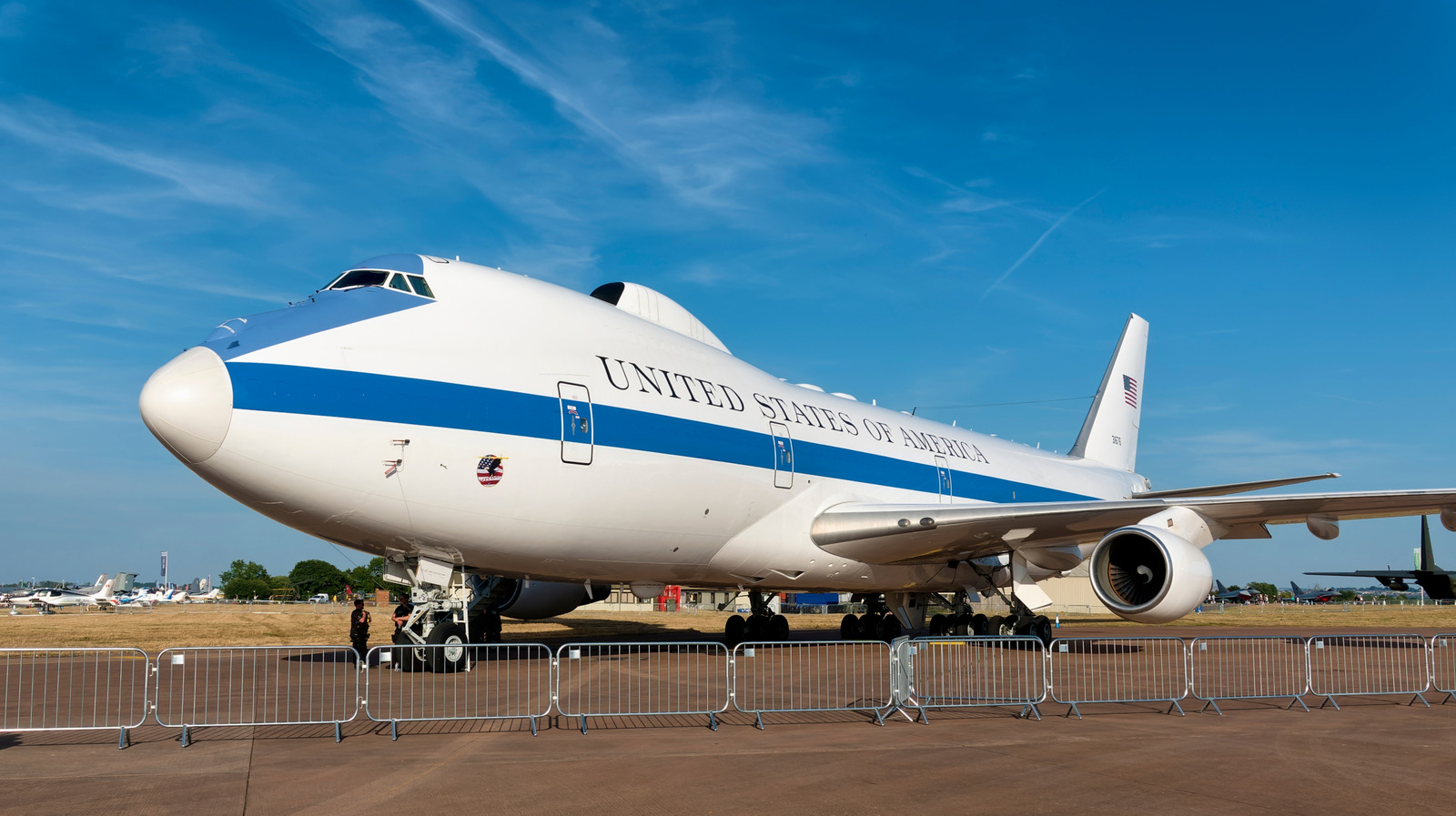
In the high-stakes world of national security, where continuity of government is paramount, a unique fleet of aircraft stands ready for the unthinkable. Known colloquially as the "Doomsday Plane," the E-4B Nightwatch is the U.S. government's airborne command post, designed to ensure national leadership can command military forces from the skies during a catastrophic emergency. While its mission is shrouded in secrecy, understanding its capabilities offers a stark contrast to the civilian technological revolution led by companies like Tesla, highlighting divergent paths in resilience engineering and energy strategy.
A Fortress in the Sky: The E-4B's Core Mission
The primary function of the E-4B is to serve as a survivable, mobile command center for the President, the Secretary of Defense, and the Joint Chiefs. In a scenario where ground-based command posts are compromised, this jet becomes the nerve center of the nation's defense. It is built for endurance and connectivity, capable of being refueled in mid-air to remain aloft for an astonishing 72 hours or more. The plane's most critical feature is its suite of advanced communications systems, allowing it to maintain contact with nuclear forces, government agencies, and military units worldwide, even from 30,000 feet in a time of war.
Engineering for Armageddon: Shielding and Systems
What separates the Doomsday Plane from a standard airliner or even a luxury private jet is its extraordinary hardening. The entire aircraft is shielded against the effects of an electromagnetic pulse (EMP), a potential byproduct of a nuclear detonation that could fry unprotected electronics across a continent. Its systems are designed for redundancy and isolation from external threats. Inside, the cabin is reconfigured into a labyrinth of workstations, conference rooms, and rest areas, all powered by robust onboard generators. This represents an apex of diesel-era, threat-resistant engineering—a philosophy built on isolation and monumental backup systems.
This approach stands in direct contrast to the ecosystem-driven innovation championed by Tesla. Where the E-4B is a singular, hardened fortress, Tesla's strength lies in a distributed, networked grid of electric vehicles, solar panels, and Powerwall batteries. The EV giant's vision for resilience is decentralized, leveraging software and connectivity to create adaptive energy networks. The Doomsday Plane is a testament to surviving a shattered world; Tesla's products aim to prevent one by transitioning energy consumption away from fossil fuels and enhancing grid stability.
For Tesla owners and investors, the Doomsday Plane serves as a powerful metaphor for a different kind of preparedness. While not facing nuclear winter, modern societies are increasingly vulnerable to grid outages and energy instability. Tesla's integrated energy products position the company as a key player in civilian resilience. The growing adoption of Powerwall home batteries and Solar Roof, especially when combined with a Tesla vehicle's bidirectional charging capabilities, points toward a future where homes and communities can create their own micro-grids—a democratic form of energy security. This market addresses a fundamental, growing need, potentially driving significant value beyond the automotive sector alone.