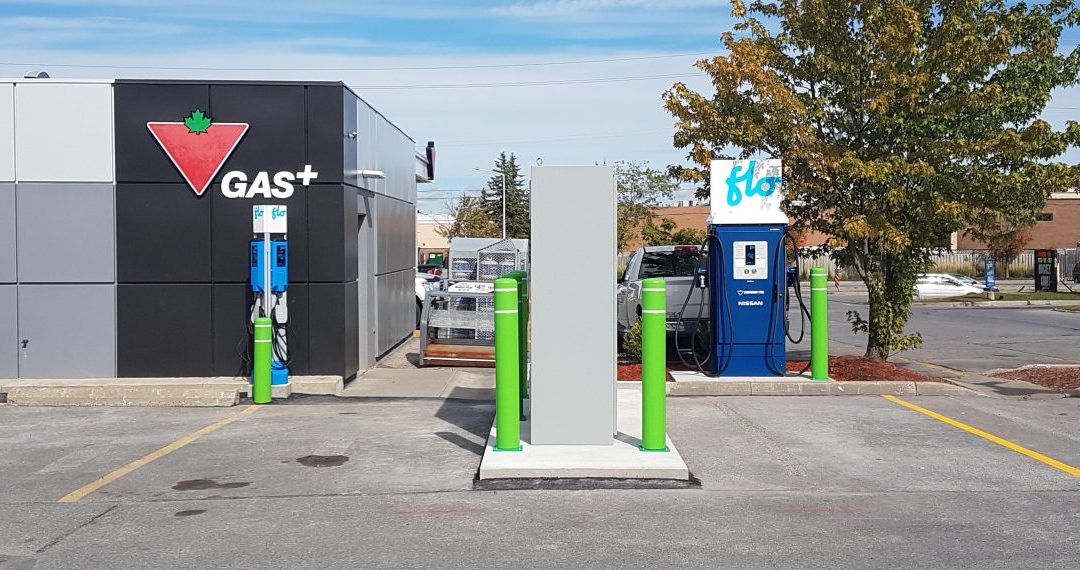
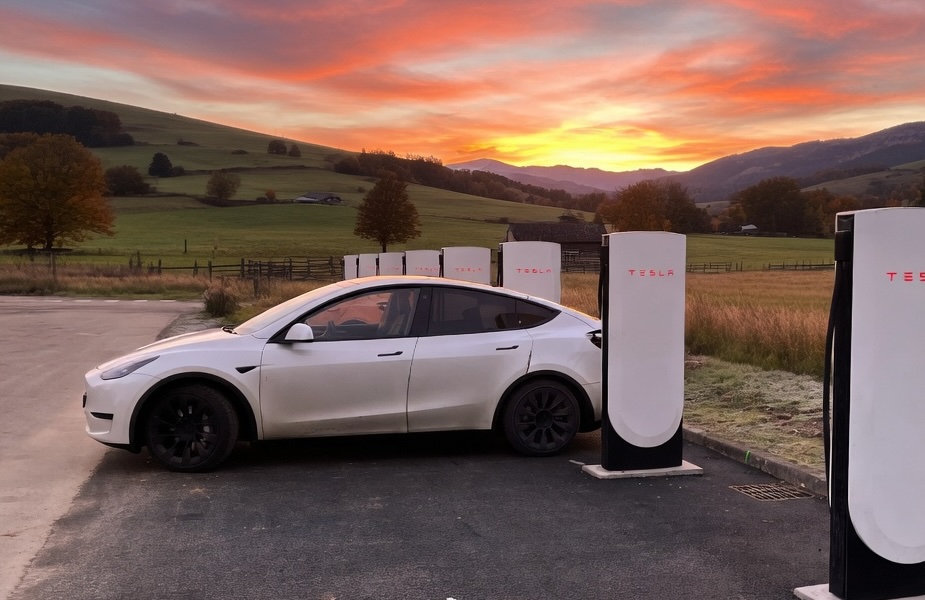
Forget range anxiety; the new frontier of electric vehicle endurance is measured in continents, not city blocks. While most EV owners plan their routes around charging networks, a new class of vehicles promises to obliterate that paradigm entirely. We took the Leapmotor C10, a range-extender electric vehicle (REEV) boasting a combined battery and gasoline generator system, on a grueling 2,000-mile cross-country test to answer a provocative question: can an EV truly conquer a marathon road trip without the charging stop shuffle?
The REEV Road Trip: A Different Kind of Electric Journey
The Leapmotor C10 operates on a principle distinct from plug-in hybrids. It functions primarily as a pure electric vehicle, using its sizable battery for daily driving. When the battery depletes, however, a compact gasoline engine activates not to drive the wheels, but to act as an onboard generator, replenishing the battery and extending range indefinitely, limited only by fuel stops. This "electric drive, gas recharge" philosophy aims to deliver zero-emission local commuting with the logistical freedom of a gasoline car for long hauls. On our journey, this meant driving hundreds of electric miles before the range extender quietly hummed to life, allowing us to bypass crowded DC fast-charging stations entirely and refuel at any conventional gas station in minutes.
Real-World Endurance: Data Over Claims
The theoretical promise of an REEV met the asphalt reality of American interstates. Over our 2,000-mile odyssey, the C10's performance hinged on driving style and terrain. In its default extended-range mode, the system maintained a battery buffer, using the generator proactively for highway cruising—the least efficient task for a battery—and saving the stored electrons for demanding climbs or urban exits. The result was a consistent 35-40 MPG equivalent when the generator was active, a figure that, while not class-leading for hybrids, is impressive when considering the vehicle is always moving under electric motor power. The true victory was in elapsed time: we completed legs of over 500 miles with only a single, five-minute fuel stop, a feat no current pure battery EV can match.
This experience underscores a critical technological crossroads. The REEV approach is less about ultimate energy efficiency and more about flexibility and time savings. It eliminates the two primary pain points of long-distance EV travel: charger availability and charge time. For drivers in regions with sparse charging infrastructure or those who frequently undertake unpredictable long journeys, the peace of mind is palpable. However, it also means accepting the maintenance and complexity of a gasoline engine alongside an EV powertrain, a compromise pure EV advocates reject.
For Tesla owners and investors, the rise of capable range-extender EVs presents both a validation and a nuanced challenge. It validates the superiority of electric drive for smoothness and performance, as even competing platforms adopt it as their core technology. The challenge is that it attacks a key Tesla vulnerability—long-distance travel convenience in non-Tesla charging corridors—without directly competing with Tesla's core vision of a pure, sustainable ecosystem. While Tesla doubles down on battery density and its vast Supercharger network, REEVs offer an alternative bridge technology for a broader, more hesitant market segment. This divergence in strategy highlights the evolving battlefield: it's no longer just about range, but about redefining the very concept of readiness for the open road.