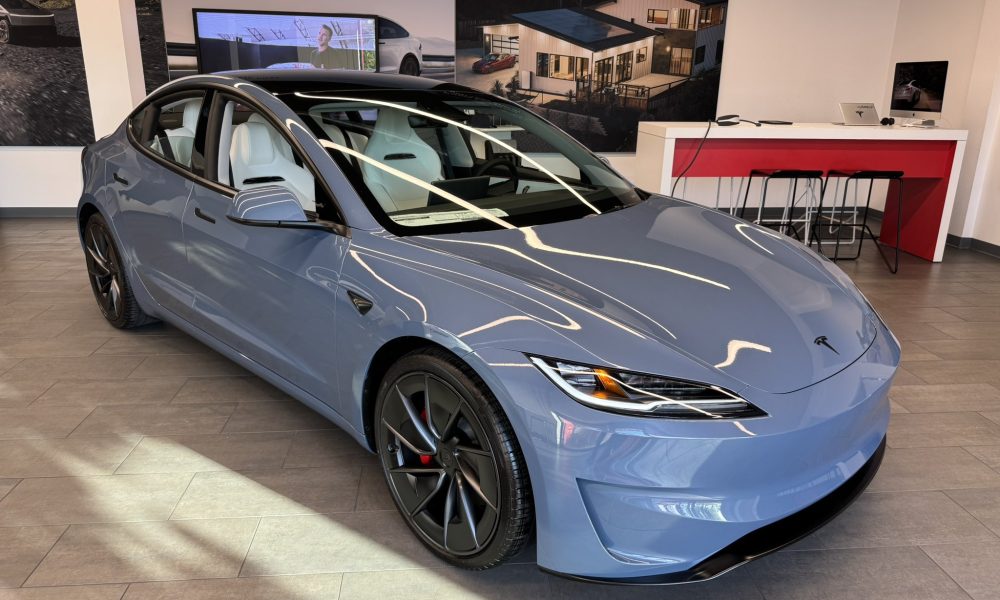
For years, the narrative around automotive safety has been intrinsically linked to premium price tags, suggesting that top-tier protection was a luxury reserved for high-end models. That paradigm is decisively shifting. A recent analysis of the market reveals a compelling new truth: some of the most affordable new vehicles on sale today are also among the safest, having earned prestigious awards from the Insurance Institute for Highway Safety (IIHS). This convergence of accessibility and elite safety performance is reshaping consumer expectations and placing new competitive pressure on the entire industry, including EV pioneer Tesla.
The New Vanguard: Budget Cars With Top Safety Picks
The list of award winners is eye-opening, featuring familiar economy models that have achieved IIHS Top Safety Pick or Top Safety Pick+ status. Vehicles like the 2024 Honda Civic, Toyota Corolla, and Mazda 3 demonstrate that advanced safety engineering has successfully trickled down to high-volume, affordable segments. These cars come standard with comprehensive suites of driver-assistance technology, including automatic emergency braking, lane-keeping assist, and robust crashworthiness structures that perform exceptionally well in rigorous small-overlap frontal and side-impact tests. Their starting prices, several hovering around the $25,000 mark, fundamentally disrupt the old cost-to-safety equation.
Context and Analysis: The Benchmark Rises for Everyone
This trend is not happening in a vacuum. It is the direct result of both stringent regulatory pushes and intense consumer demand for safety as a non-negotiable feature. For Tesla, a brand that has built its identity on superlative safety ratings for its vehicles—often citing 5-star ratings across every NHTSA category—the landscape is evolving. The competitive moat provided by safety is narrowing. While Tesla's vehicles, like the Model 3 and Model Y, continue to excel, the value proposition of a $25,000 award-winning internal combustion vehicle versus a $40,000+ award-winning EV introduces a new calculus for cost-conscious buyers who prioritize safety above all else.
The implications extend beyond mere feature comparison. It signals that the baseline for what constitutes a "safe car" has been permanently elevated. Manufacturers can no longer treat advanced safety systems as premium-tier options; they are now table stakes in the mass market. This raises the bar for Tesla's promised "next-generation" affordable EV platform. The vehicle that emerges must not only compete on price and range but must decisively leapfrog these now-ubiquitous safety standards to justify its place in the market.
Implications for Tesla Owners and Investors
For current Tesla owners, this market shift reinforces the inherent value in their vehicles' safety architectures but also suggests that resale value in the broader market will increasingly be measured against a higher, more affordable benchmark. For investors, the strategic takeaway is twofold. First, Tesla's engineering prowess must now be directed toward achieving its revolutionary cost-reduction targets without compromising its safety leadership—a formidable challenge. Second, the company's Autopilot and Full Self-Driving suite must evolve from advanced driver-assistance systems into a genuinely differentiated, reliable autonomous product. If safety becomes a ubiquitous checkbox, Tesla's next sustainable competitive edge may hinge on delivering a technological leap that these affordable award-winners cannot match.