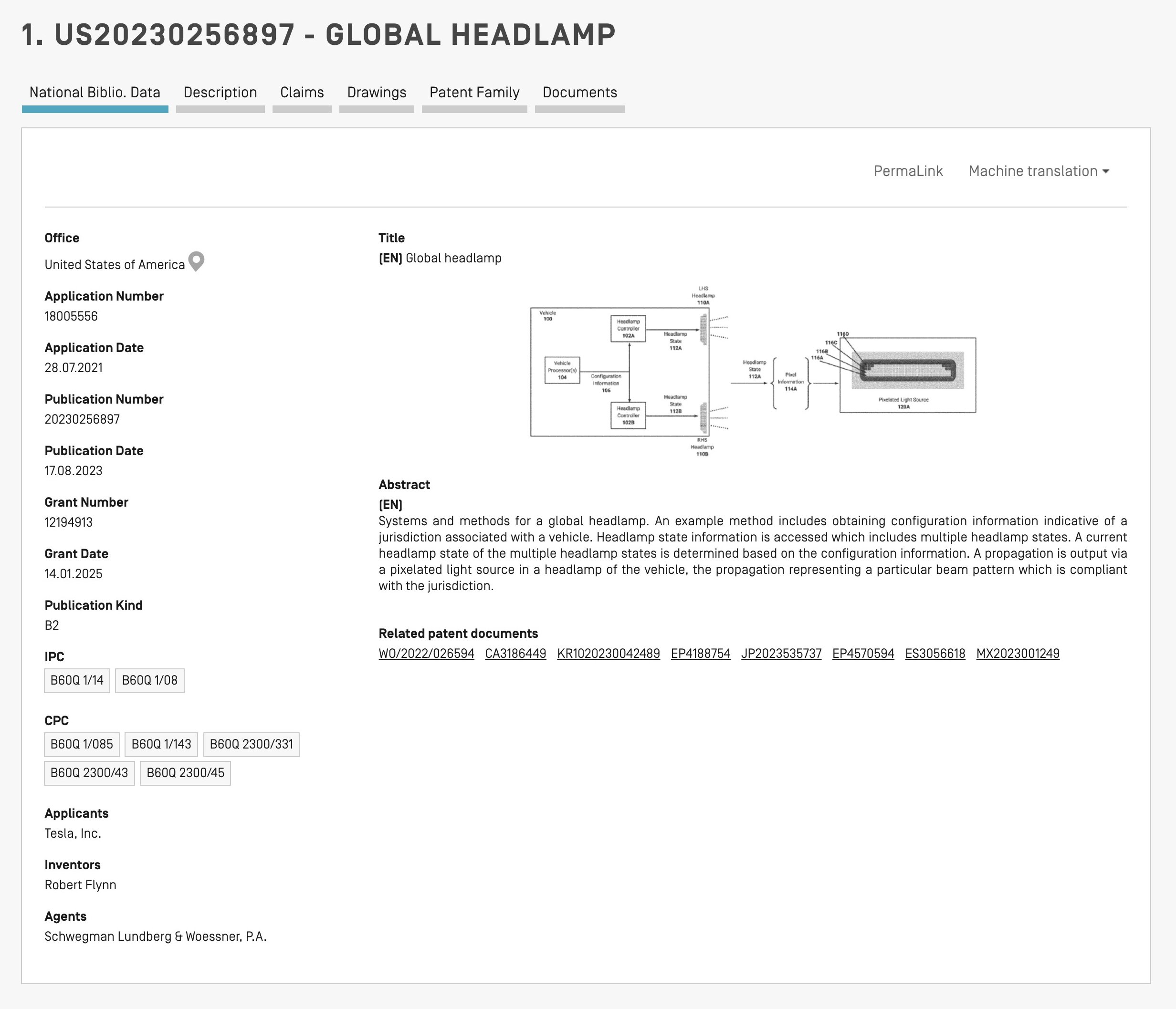
For decades, the global automotive industry has been hamstrung by a costly and complex puzzle: engineering unique physical components for different regional regulations. A recent patent filing from Tesla, however, signals a profound shift in how the company—and potentially the entire sector—approaches this challenge. By moving critical hardware like headlights into the realm of software-defined systems, Tesla is not just streamlining its own operations; it is fundamentally rewriting the rulebook for global vehicle design and homologation.
The Digital Headlight: A Software Solution to a Hardware Problem
The core of Tesla's innovation lies in a seemingly mundane component: the headlight. Traditionally, automakers have had to design, manufacture, and inventory dozens of physical variants to comply with disparate global standards for beam pattern, intensity, and adaptive functionality. Tesla's patented system replaces this rigid hardware with a fully digital, software-controlled headlight unit. Using an array of LEDs and a sophisticated lens system governed by software, a single physical component can instantaneously adapt its output to meet the specific regulatory requirements of any market in the world. This transforms a static part into a dynamic, programmable device.
Strategic Implications Beyond Illumination
This breakthrough extends far beyond lighting. It exemplifies Tesla's overarching strategy of leveraging software and vertical integration to circumvent traditional industrial bottlenecks. The principle of a single global hardware platform, enabled by region-specific software, can be applied to other regulated components like acoustic vehicle alerting systems (AVAS) or even certain aspects of autonomous driving functionality. This approach drastically reduces manufacturing complexity, slashes inventory costs, and accelerates the speed at which a single vehicle design can be rolled out worldwide. It turns regulatory compliance from a factory-floor constraint into a software update.
This strategy is a direct counter to the fragmented approach of legacy automakers and provides Tesla with unparalleled agility. In a rapidly evolving regulatory landscape—especially concerning EV safety and data standards—the ability to adapt a fleet's performance via over-the-air updates is a monumental competitive advantage. It future-proofs vehicles against new laws and allows Tesla to enter new markets without the traditional lead time and cost associated with retooling production lines for physical part variations.
What This Means for Tesla Owners and Investors
For owners, this deepens the value proposition of Tesla's software-centric philosophy. Vehicles become more globally capable and potentially retain higher residual value due to their inherent adaptability. Features and compliance adjustments delivered via OTA updates reinforce the perception of the car as a continuously improving asset. For investors, this patent underscores a critical and often underestimated pillar of Tesla's economic moat: operational efficiency at a global scale. By systematically reducing the marginal cost and complexity of world-wide expansion, Tesla protects its industry-leading margins and strengthens its capacity for rapid, capital-efficient growth in an increasingly competitive electric vehicle market. It is a masterclass in turning regulatory complexity from a barrier into a strategic advantage.