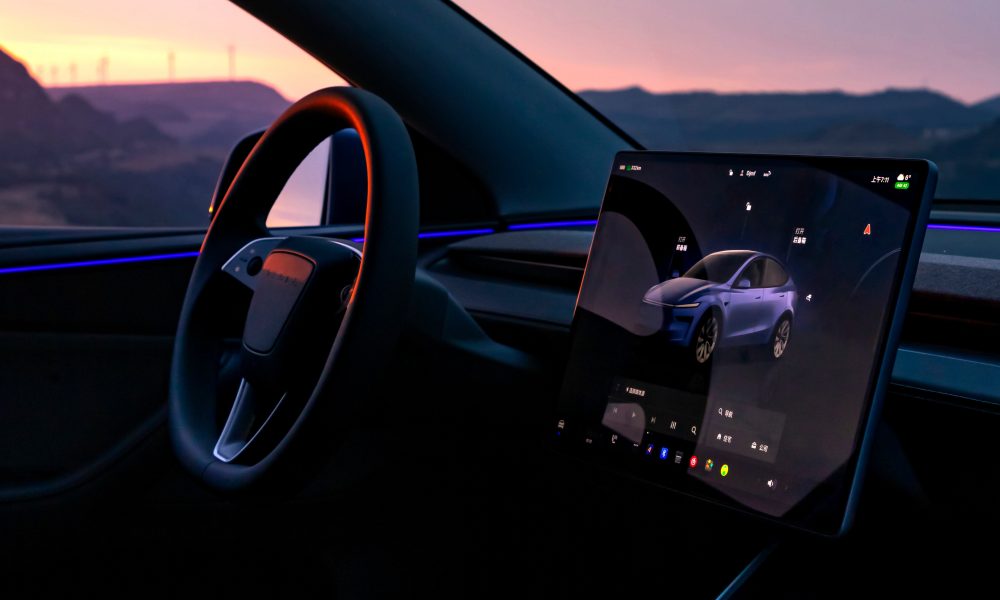
As Lunar New Year 2026 festivities illuminate China, Tesla has delivered a substantial software gift to its owners in the region. The rollout of update 2025.45.32.1 introduces a headline-grabbing automation app, but it is a nuanced, location-specific enhancement to the navigation system that represents a critical leap forward for urban EV convenience. This update directly tackles one of the most significant pain points in megacities: efficiently locating available fast-charging stalls.
The Navigation Breakthrough: Supercharger Aggregation
At the core of this update is the sophisticated aggregation of Supercharger stations within Tesla's in-car navigation. In dense urban environments like Shanghai or Beijing, Supercharger locations are often multi-story facilities with numerous stalls spread across different levels or sections. Previously, the system might have treated each cluster or floor as a separate destination, leading to driver confusion and inefficiency. Now, the navigation intelligently groups all stalls at a single address into one unified, searchable location. This provides a clearer, more accurate picture of total charger availability and streamlines routing, effectively turning a complex charging hub into a single, simple destination.
Context: A Strategic Move in a Critical Market
This is far from a minor bug fix; it's a strategic refinement tailored for Tesla's most competitive arena. China's electric vehicle market is the world's largest and most fiercely contested, where seamless technology integration is a key battleground. By optimizing the navigation experience around localized infrastructure challenges, Tesla is sharpening its core ownership advantage—the ease of using the Supercharger network. This move comes as domestic Chinese EV brands rapidly expand their own high-speed charging networks, making user experience a critical differentiator. The update demonstrates Tesla's commitment to iterative, market-specific software improvements that address real-world usability.
While the automation feature offers broad appeal for vehicle customization, the navigation upgrade is a direct response to granular, on-the-ground feedback from Chinese Tesla owners. It reduces pre-charging anxiety, minimizes time spent circling multi-level parking structures, and enhances overall trip planning confidence in congested cities. This focus on refining the daily ownership experience, especially for those reliant on public fast-charging, underscores Tesla's software-led philosophy where the car continuously improves long after purchase.
Implications for Tesla Owners and Investors
For Tesla owners in China, this update translates to tangible daily benefits: less stress, saved time, and a more intelligent vehicle. It reinforces the value proposition of the integrated Tesla ecosystem, where the car, map, and charging network work in concert. For global owners, it signals the type of region-specific enhancements that may eventually propagate to other complex urban landscapes worldwide. For investors, the update is a microcosm of Tesla's enduring strength. It highlights the company's agility in using over-the-air software to solve specific market challenges, thereby increasing customer satisfaction and loyalty in a region vital to its growth and profitability. In the high-stakes EV race, sometimes the most impactful innovations are not the flashiest new features, but the thoughtful refinements that make technology effortlessly useful.