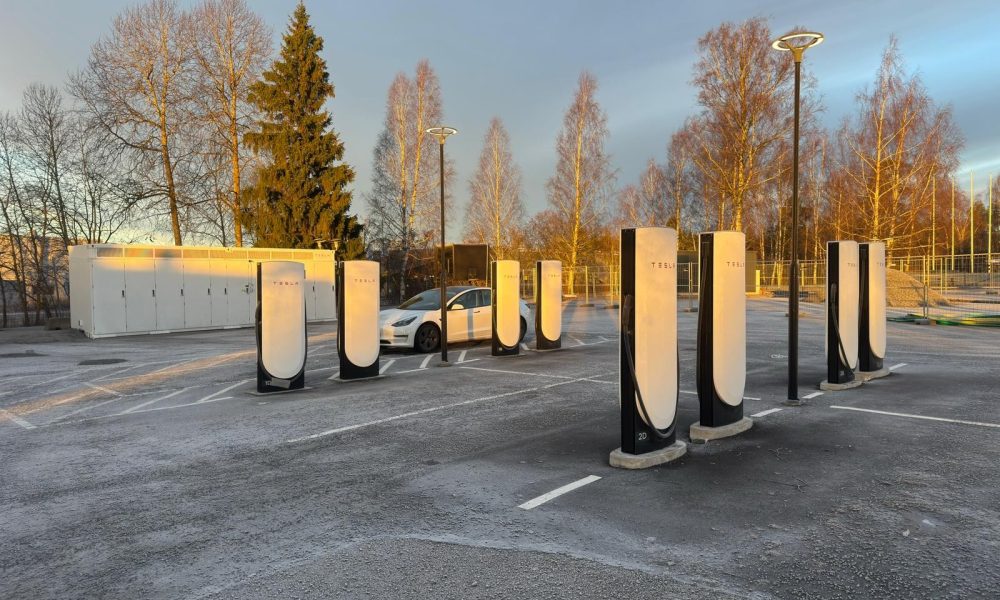
While Tesla's bitter labor dispute with Sweden's IF Metall union has seen picket lines, port blockades, and sympathy strikes across key industries, one strategic site continues to function as a persistent flashpoint. The company's flagship Megapack-powered Supercharger station in Arlandastad, strategically positioned near Stockholm's main airport, remains operational despite the union's concerted efforts to isolate Tesla's Swedish operations. This defiance is not just about keeping chargers on; it's a high-stakes demonstration of Tesla's integrated energy strategy becoming a critical asset in a corporate standoff.
A Strategic Site Defying Conventional Tactics
The Arlandastad Supercharger is no ordinary charging hub. It is directly supported by a Tesla Megapack battery energy storage system (BESS), allowing it to draw and store power from the grid during off-peak hours. This design, intended for grid stability and cost efficiency, has inadvertently provided a layer of resilience. Union blockade tactics, which have successfully disrupted logistics and servicing for other Tesla facilities, struggle to completely incapacitate a site that can, in essence, operate with a degree of energy independence. The continued activity of this high-visibility location, frequented by international travelers and local EV drivers alike, serves as a daily, visible rebuttal to the union's campaign.
IF Metall's Escalation and the Core Dispute
For IF Metall, the operational Supercharger is a symbol of Tesla's refusal to engage with Sweden's long-established model of collective bargaining. The union has sought a collective agreement covering Tesla's Swedish mechanics since late 2023, a standard practice for nearly all major companies in the country. Tesla's firm stance against signing such an agreement, consistent with its global anti-union posture, has triggered a widening conflict. The union's frustration is palpable, as the Megapack site's resilience undermines the pressure campaign, leading to further escalations and appeals for broader international labor solidarity against the EV giant.
The ongoing functionality of the Arlanda site underscores a deeper strategic divergence. Tesla views the dispute as a matter of corporate principle and operational flexibility, while IF Metall and its allied unions frame it as a defense of the foundational Swedish labor model. The Megapack's role highlights how Tesla's vertical integration—from cars to energy—can create unexpected operational advantages, turning an energy product into a tactical asset in a labor war.
Implications for Tesla's Strategy and Stakeholders
For Tesla owners and investors, this conflict reveals several critical insights. First, it demonstrates the tangible value of Tesla's integrated energy ecosystem beyond revenue streams; it can provide operational continuity in adversarial conditions. Second, it signals that Tesla's confrontations with organized labor, particularly in Europe, are likely to be protracted, complex, and potentially damaging to its service and expansion capabilities in affected regions. The company's willingness to absorb short-term reputational and logistical pain in Sweden suggests it will not easily concede to similar demands elsewhere.
Finally, the stalemate at Arlandastad is a live test case. It proves the resilience of a distributed energy-backed infrastructure but also highlights the intense scrutiny Tesla faces on global governance and labor practices. Investors must weigh the company's rigid principled stand against the potential for sustained operational friction in key markets, while owners in conflict zones may see firsthand how Tesla's energy products can, quite literally, keep the power on when traditional support channels are under pressure.