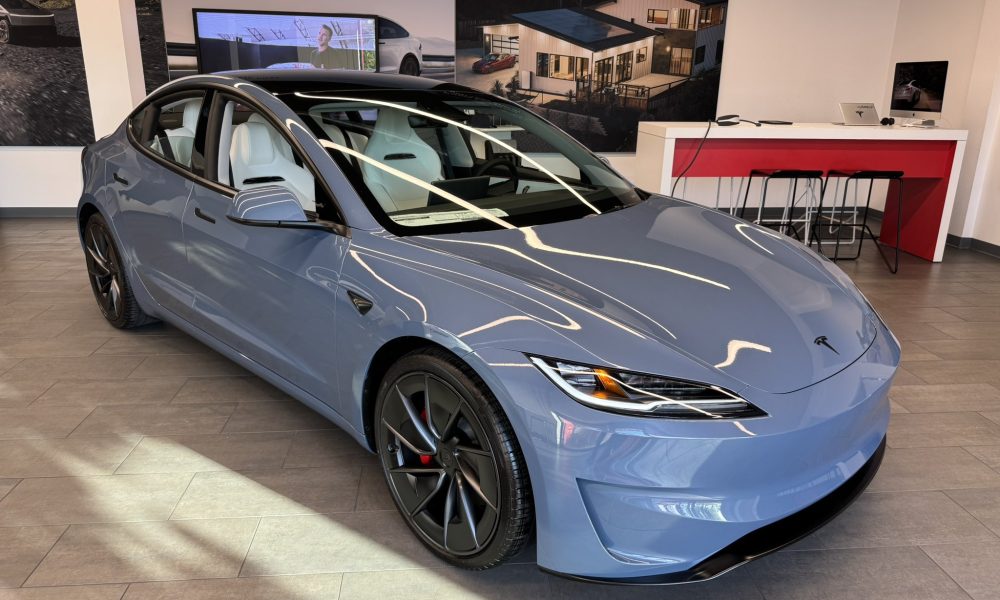
In a bold move to accelerate demand and clear inventory ahead of its next chapter, Tesla has deployed one of the most powerful tools in the auto industry's playbook: ultra-cheap money. The company is now offering a staggering 0.99% annual percentage rate (APR) on new Model 3 purchases and an even more aggressive 0% APR on new Model Y configurations for qualified buyers in the United States. This financing blitz, directly from Tesla's own lending arm, dramatically undercuts the current average loan rate for new vehicles and signals a strategic pivot to maintain sales velocity in a competitive and interest-rate-sensitive market.
Decoding the Numbers: A Stunning Departure from Market Rates
The promotional rates represent a massive discount compared to both Tesla's standard financing and the broader market. As of May 2024, the average interest rate for a new car loan in the U.S. hovers around 7%. For a buyer financing $40,000 over 72 months, the difference between a 7% loan and a 0.99% loan translates to thousands of dollars in saved interest, effectively lowering the total cost of ownership. The 0% offer on the Model Y, the world's best-selling vehicle in any category last year, is particularly aggressive and is likely targeted at specific inventory builds, such as the all-wheel-drive Long Range variant, to streamline production and delivery logistics.
Strategic Timing: More Than Just a Summer Sale
This is not a routine promotion. The launch follows Tesla's reported first quarter delivery dip and amidst rising competition from both legacy automakers and Chinese EV rivals. By slashing financing costs, Tesla directly addresses a key barrier for potential buyers: high monthly payments fueled by the Federal Reserve's interest rate hikes. The move cleverly improves affordability without resorting to further across-the-board price cuts, which can erode brand value and margins. Analysts see this as a tactical inventory management tool, incentivizing immediate purchases of existing stock as the company prepares for the launch of updated vehicles and its next-generation platform.
The implications for Tesla's financials are nuanced. While subsidized interest rates will incur a cost, they are a calculated trade-off to sustain volume, maintain factory utilization, and avoid the deeper margin impact of steep price reductions. It also strengthens Tesla's integrated ecosystem, steering customers toward its in-house financing and insurance products, which provide valuable data and customer lifetime value.
What This Means for Tesla Owners and Investors
For potential buyers, this is one of the most compelling financial incentives Tesla has ever offered, making the entry point for a new electric vehicle more accessible than it has been in years. Current owners looking to upgrade may find the math particularly favorable. For investors, the promotion is a double-edged sword. It demonstrates Tesla's agility and willingness to use creative levers to drive demand, which is positive for near-term delivery numbers. However, it also underscores the ongoing competitive pressures and the cost of maintaining market leadership in a slowing EV adoption curve. The market will watch closely to see if this financing push successfully converts to deliveries without significantly jeopardizing automotive gross margins in Q2.
Ultimately, Tesla's financing fire sale is a high-stakes bet that moving metal now at a slight cost is preferable to a slowdown. It places the company squarely in line with traditional automotive sales tactics, a notable evolution for a brand that once shunned such promotions. The success of this campaign will be measured not just in quarterly deliveries, but in how effectively it navigates the transition to its future growth phase without sacrificing its hard-won profitability.