Tesla's relentless global expansion of its most advanced driver-assistance system is poised to enter a new, strategic European market. The company has formally applied for permission to conduct real-world testing of its Full Self-Driving (Supervised) technology on the public roads of Jönköping, Sweden. This move signals a critical next step in Tesla's data-driven development cycle, targeting a region known for its challenging winter driving conditions and robust regulatory environment.
Strategic Expansion into Nordic Terrain
Jönköping represents more than just another city on Tesla's FSD map. Located in southern Sweden, the city and its surrounding region offer a vital proving ground characterized by complex weather patterns, narrow urban streets, and varied road infrastructure. Successfully navigating these conditions is paramount for Tesla to validate and improve its FSD algorithms for a wider European rollout. Collecting data in this environment is essential for training the system to handle snow-covered lane markings, low-visibility scenarios, and unique traffic behaviors not as prevalent in its primary North American training datasets.
The Regulatory Hurdle and Data Imperative
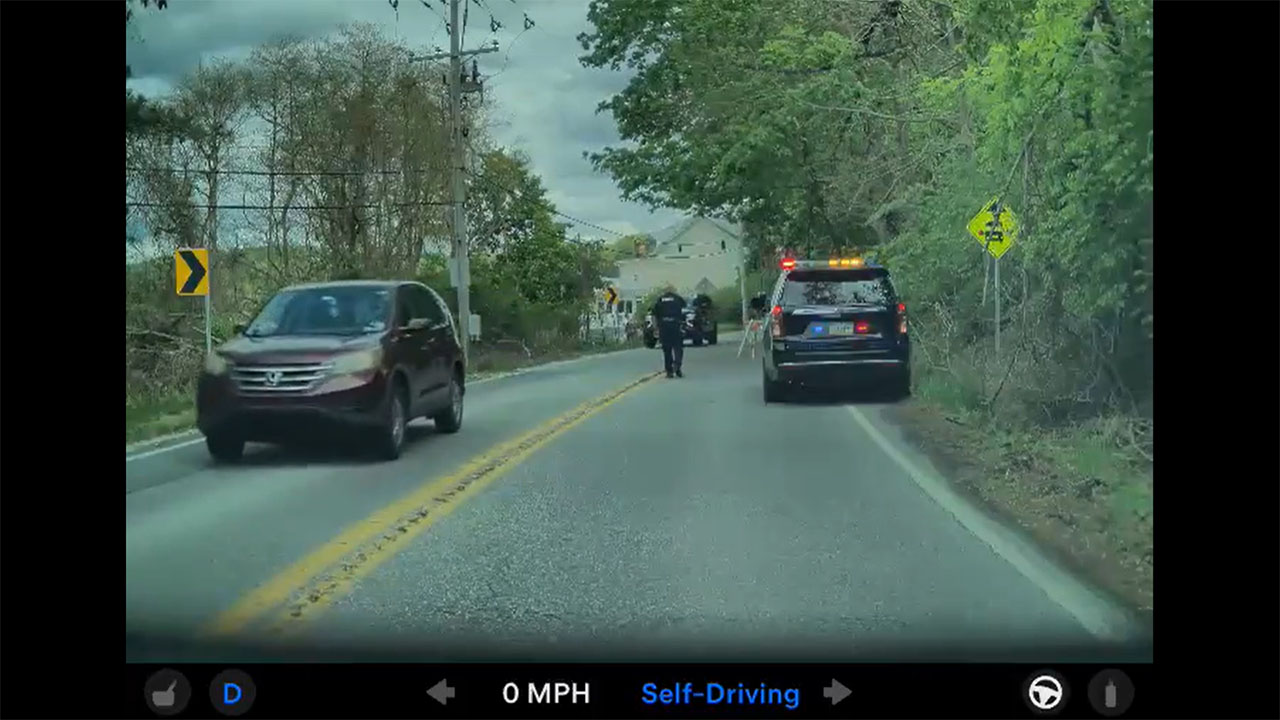
Tesla's application is now subject to review by Swedish transport authorities, who will scrutinize the safety protocols and data-handling procedures. Unlike the less-regulated U.S. approach, European approvals are typically meticulous and conditional. Gaining this permit would allow Tesla to deploy a limited fleet of vehicles equipped with FSD Supervised (V12), the company's latest end-to-end neural network-based system, which relies entirely on camera vision and AI. Every mile driven in Jönköping would feed back into Tesla's massive data engine, helping to refine the system's response to countless edge cases and bringing its global "vision-only" approach closer to universal reliability.
The push into Sweden underscores Tesla's broader strategy to achieve regulatory acceptance across the European Union, a market with stringent type-approval rules for automated driving features. A successful testing phase in Jönköping could serve as a model and a data trove for future applications in neighboring Nordic countries and beyond. It also places Tesla in direct dialogue with European safety officials, a necessary, if complex, relationship for the long-term authorization of more autonomous functionality.
Implications for Owners and the Investment Thesis
For current and prospective Tesla owners in Europe, this development is a promising indicator that the significant investment in the FSD software package may eventually deliver on its promised capabilities in their region. While a full public release in Sweden likely remains months, if not years, away, the initiation of testing is the first concrete step. For investors, the expansion into new regulatory domains demonstrates Tesla's commitment to its AI and robotics pillar as a core growth driver. Each new testing approval reduces the risk of the technology being confined to a single continent and validates the scalability of its data-centric development model, potentially unlocking future revenue streams in key international markets.