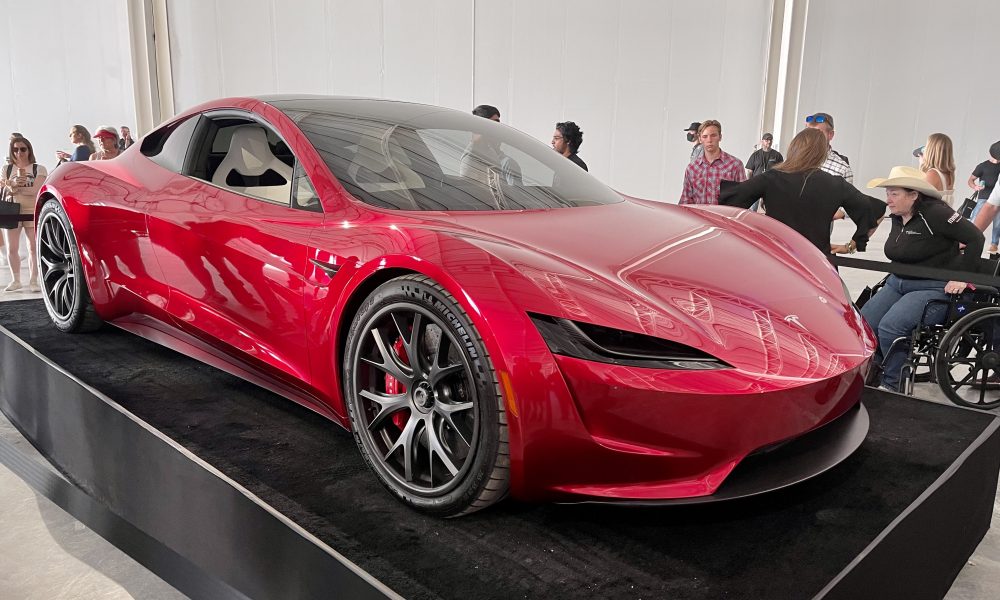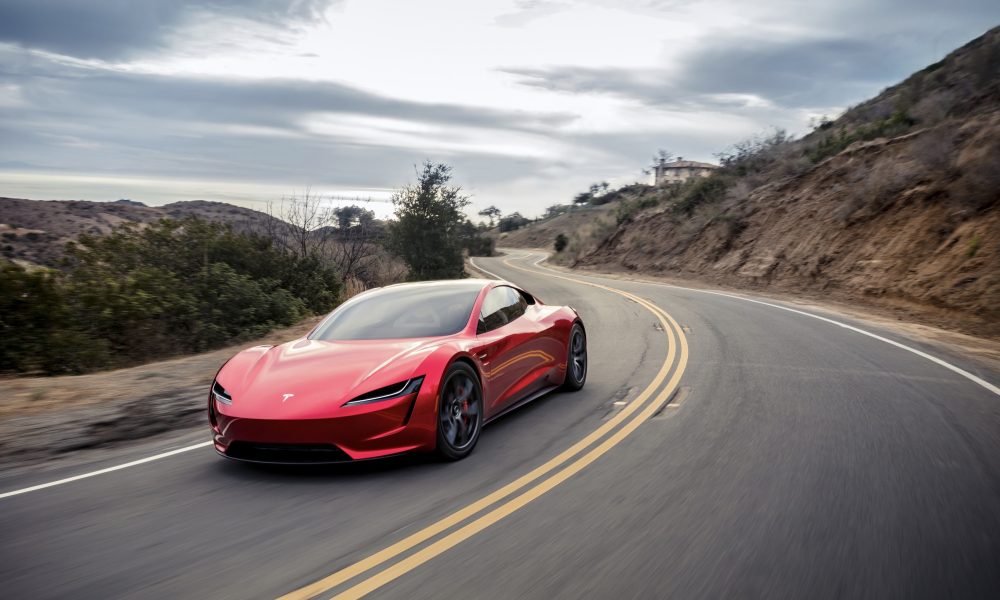
Elon Musk has once again reset the clock on Tesla's most tantalizing promise. In a move that blends anticipation with a hint of exasperation for the EV community, the billionaire CEO has announced a new unveiling date for the long-awaited next-generation Tesla Roadster, pushing it beyond the previously stated—and suspiciously timed—April Fool's Day target. This latest shift marks another chapter in the saga of a vehicle first revealed with staggering performance claims over six years ago, underscoring the tension between Tesla's visionary ambitions and the hard realities of production prioritization.
A Timeline of Ambition and Delay
The Roadster's journey is a masterclass in automotive vaporware, albeit with a tangible prototype. First unveiled in November 2018, the vehicle stunned the world with promises of a 0-60 mph time under 1.9 seconds, a top speed over 250 mph, and a staggering 620-mile range. Initial deliveries were boldly slated for 2020. However, that target evaporated as Tesla rightly funneled its resources into scaling the Model Y and navigating global supply chain crises. The project entered a state of limbo, mentioned periodically by Musk but always as a future endeavor. The announcement of an April 1, 2024 unveiling was met with skepticism given the date, and this latest postponement confirms that the Roadster remains, for now, a secondary priority to the company's core mission of mainstream electrification.
Why the Roadster Keeps Getting Pushed Back
The rationale behind the repeated delays is a mix of pragmatism and unprecedented engineering challenges. Simply put, building the hypercar promised in 2018 requires technology and resources that are still being developed. Tesla's focus has been laser-like on achieving volume production with the Cybertruck and advancing its 4680 battery cell and structural battery pack programs—technologies that are likely foundational to the Roadster's promised performance. Furthermore, with a price tag expected to start at $200,000, the Roadster is a low-volume halo car. In a period where macroeconomic pressures demand volume and margin, dedicating critical engineering talent to this project is a luxury Tesla has repeatedly deferred. It is a project born from a surplus of ambition, now patiently waiting for the company's core technological and industrial capabilities to catch up.
For Tesla owners and investors, the Roadster's latest delay is a double-edged sword. On one hand, it reaffirms management's disciplined focus on capital allocation and executing on its high-volume, high-impact projects like the Model 3 Highland refresh and Full Self-Driving development. The continued deferment of a niche product signals that the company is not being distracted from its broader market goals. On the other hand, the Roadster serves as a powerful symbol of Tesla's technological peak—a proof-of-concept that pushes the boundaries of what an electric vehicle can be. Each delay slightly tarnishes that symbol and tests the faith of the thousands of customers who placed $50,000 deposits years ago. Ultimately, the Roadster's fate is a barometer of Tesla's confidence; when it finally enters production, it will signal that Tesla has mastered its current challenges and is ready to, once again, redefine the possible.