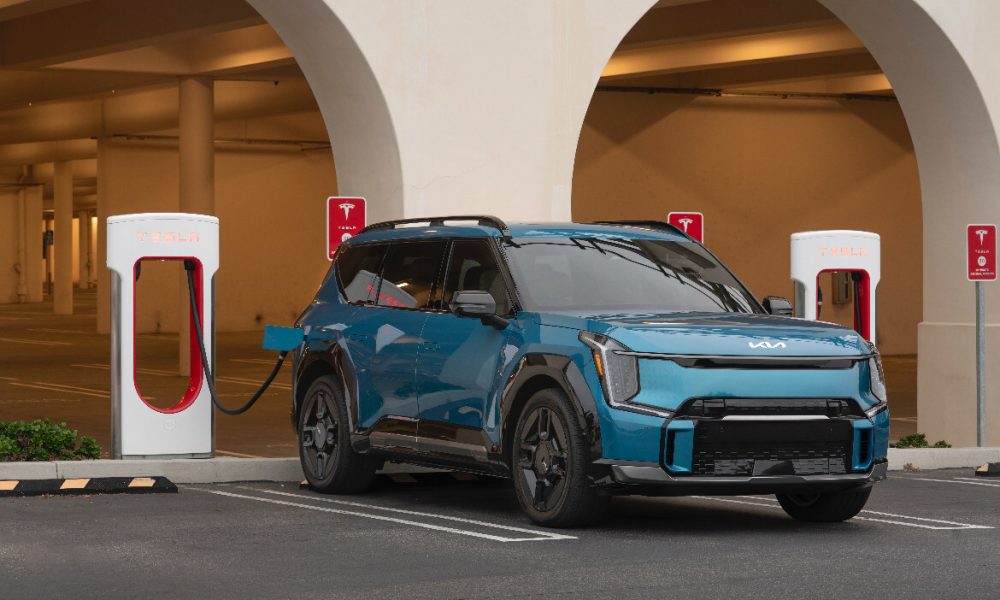
Tesla's industry-leading Supercharger network, long a coveted perk for its owners, is expanding its reach to drivers of other electric vehicle brands in another key market. The move, part of Tesla's strategic initiative to open its proprietary charging standard, marks a significant step in the normalization of electric vehicle infrastructure and positions the company as a central player in the broader EV ecosystem beyond just manufacturing cars.
Strategic Expansion of a Critical Asset
This latest country-specific opening is not an isolated event but a calculated expansion of a global program. Tesla began opening select Supercharger sites to non-Tesla EVs in Europe in late 2021, followed by a similar rollout in the United States and other regions. The program requires drivers of other brands to use the Tesla app to initiate and pay for a charging session, often at a different rate than Tesla owners. The core value proposition is access to Tesla's renowned network reliability and prime locations. For Tesla, it transforms a cost center into a substantial new revenue stream, monetizing its over 50,000 global Superchargers during periods of lower utilization by its own fleet.
Balancing Growth with the Core Customer Experience
The primary challenge inherent in this strategy is maintaining the seamless experience that Tesla owners have come to expect. The network's ease of use—featuring plug-and-charge capability and reliable uptime—is a major selling point for the brand. Introducing vehicles with different charge port locations and varying charging protocols risks creating congestion and "ICE-ing" scenarios at busy sites. Tesla has addressed this by carefully selecting which stalls to open, often deploying the Magic Dock CCS adapter at compatible V3 and V4 stations, and implementing dynamic pricing to manage demand. The company's data-driven approach allows it to balance new revenue against the imperative to keep its loyal customer base satisfied.
The broader context is one of accelerating EV adoption colliding with a pressing need for more high-speed charging infrastructure. As legacy automakers ramp up their electric lineups, their customers are encountering the limitations of often unreliable third-party charging networks. Tesla's open access program directly alleviates this pain point, effectively making Tesla's infrastructure a default solution for the industry. This not only generates income but also subtly promotes Tesla's North American Charging Standard (NACS), which has now been adopted by nearly every major automaker for future models. The strategic win is twofold: immediate revenue and long-term influence over the global charging standard.
For Tesla owners, the implications are nuanced. In the short term, there may be increased competition for stalls at high-demand locations and times, potentially diluting a key ownership benefit. However, the significant influx of capital from new users is directly funneled back into the rapid expansion of the Supercharger network itself. This means more chargers, in more locations, for everyone. For investors, the move underscores a visionary pivot: Tesla is evolving from an automotive manufacturer into a vertically integrated energy and infrastructure company. Monetizing Supercharging not only diversifies revenue but also strengthens the entire EV market, upon which Tesla's long-term mission depends.