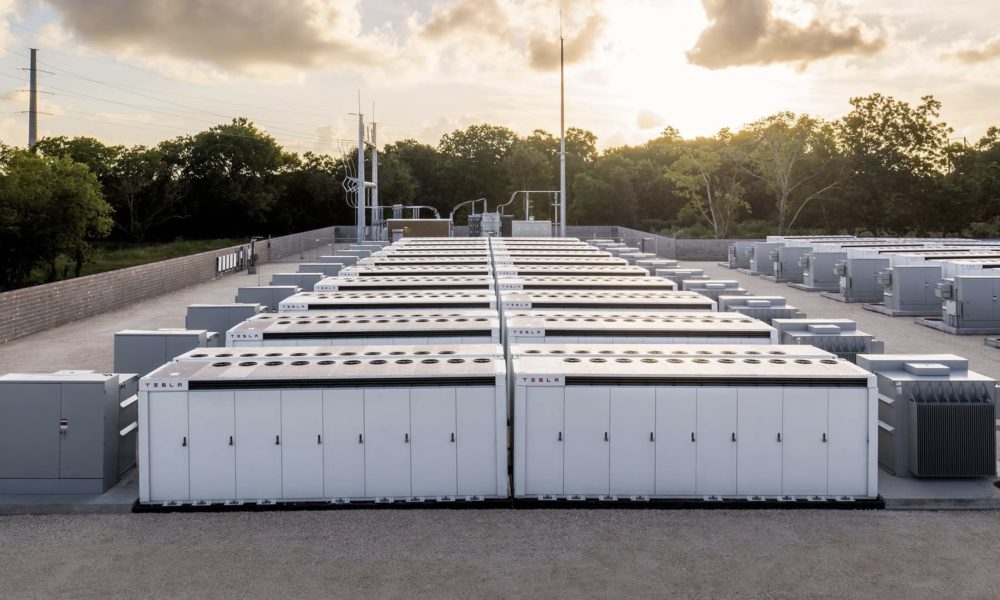
In a landmark deal that underscores the critical convergence of artificial intelligence and sustainable energy infrastructure, a massive new AI data center in Brazil will be anchored by Tesla's utility-scale battery technology. The $1.1 billion project, one of the largest of its kind in Latin America, has chosen Tesla Megapacks as its energy backbone, signaling a powerful endorsement of the system's ability to manage the immense and unpredictable power demands of advanced computing. This move transcends the traditional role of backup power, positioning the data center as an active, grid-stabilizing player in Brazil's energy ecosystem.
Megapack as Strategic Grid Partner, Not Just Backup
The project's core innovation lies in its planned integration with the local power grid. By leveraging the Tesla Megapack systems, the facility is engineered to function with a dual identity. Primarily, it will consume vast amounts of electricity to fuel its AI servers. However, during periods of peak grid demand or instability, the stored energy in the Megapacks can be discharged back to the public network. This transforms the data center from a passive drain on resources into a grid-supporting asset, providing crucial frequency regulation and backup capacity that enhances regional energy security and reliability.
Addressing the AI Energy Dilemma with Storage
This project arrives as the global tech industry grapples with the soaring energy appetite of AI. Training and running large language models and AI clusters require consistent, high-density power, often straining local infrastructure. The Brazilian data center's blueprint directly addresses this challenge. The Megapack installation will allow the facility to smooth its own power draw, reduce strain during peak times, and potentially operate more independently. This model offers a replicable template for future AI data centers worldwide, proving that exponential growth in computing can be paired with intelligent, grid-responsive energy management.
For Tesla Energy, this deal is a significant strategic victory. It demonstrates the Megapack's competitiveness and desirability in a high-stakes, capital-intensive sector beyond pure renewable energy storage. Winning a cornerstone role in a $1.1 billion flagship project provides immense validation and a compelling case study for Tesla's energy division as it seeks to expand its industrial and commercial footprint. It proves the technology's value proposition for the most demanding modern applications, potentially opening doors to similar contracts with other global tech giants expanding their AI infrastructure.
For Tesla investors and owners, this announcement highlights the growing material impact of the often-overlooked Energy Generation and Storage segment. While vehicle sales dominate headlines, deals of this magnitude showcase a parallel, high-margin business line with enormous addressable market potential. For the broader EV community, it reinforces the foundational synergy between a renewable-powered grid and electrified transport. A grid stabilized by large-scale storage like Megapack is more capable of supporting the widespread adoption of electric vehicles, creating a virtuous cycle that benefits all of Tesla's core missions.