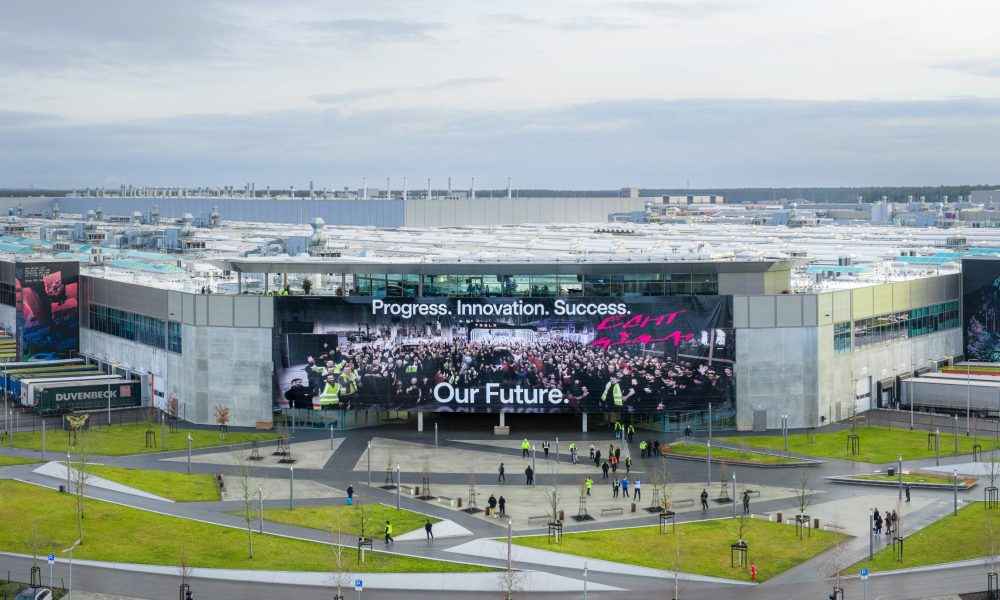
In a stark warning that underscores the escalating tension between industrial ambition and regulatory reality, Elon Musk has stated that the future expansion of Tesla's pivotal Giga Berlin-Brandenburg factory is contingent on it being "free from external influences." The CEO's pre-recorded comments, delivered with characteristic bluntness, frame the facility's growth not just as an operational goal but as a political and bureaucratic battleground that could define Tesla's European trajectory.
Musk's Ultimatum: Autonomy for Acceleration
The core of Musk's message is a direct cause-and-effect assertion: unfettered operational freedom is the prerequisite for continued investment and scaling at Giga Berlin. While not detailing specific "influences," the context points to Germany's complex regulatory environment, lengthy permitting processes, and persistent opposition from local activist groups. These forces have historically delayed the factory's construction and initial production. Musk's statement suggests that the Phase 2 expansion—critical for achieving the site's full planned capacity of 1 million vehicles annually—will not proceed under the current conditions of scrutiny and challenge. It is a strategic gambit, positioning regulatory streamlining as the non-negotiable price for Germany to secure its place as Tesla's European export hub.
The Stakes for Europe's EV Landscape
Giga Berlin is far more than another manufacturing plant; it is the cornerstone of Tesla's strategy to dominate the European electric vehicle market from within. Its success directly impacts the company's ability to meet regional demand with local production, avoiding import costs and logistics delays. A stall in its growth would cede ground to accelerating competition from legacy automakers and Chinese EV manufacturers who are aggressively targeting the continent. Furthermore, the factory's advanced production techniques, like the revolutionary gigacasting process, are meant to be exported from Berlin, influencing global manufacturing efficiency. Any delay thus has ripple effects beyond Brandenburg, potentially slowing the pace of innovation across Tesla's entire network.
For Tesla owners and investors, the implications are twofold. Operationally, constrained growth at Giga Berlin could prolong wait times for European customers and limit the speed at which new models, like the anticipated $25,000 compact vehicle, are rolled out regionally. Financially, it represents a significant execution risk. The market has priced in aggressive growth from Tesla's international factories; failure to scale Berlin efficiently could pressure margins and challenge the narrative of Tesla as an unstoppable global manufacturing force. Investors will now watch closely for tangible signs of de-escalation between Tesla and German authorities, viewing it as a key indicator of future capital allocation and revenue potential from one of the company's most important assets.