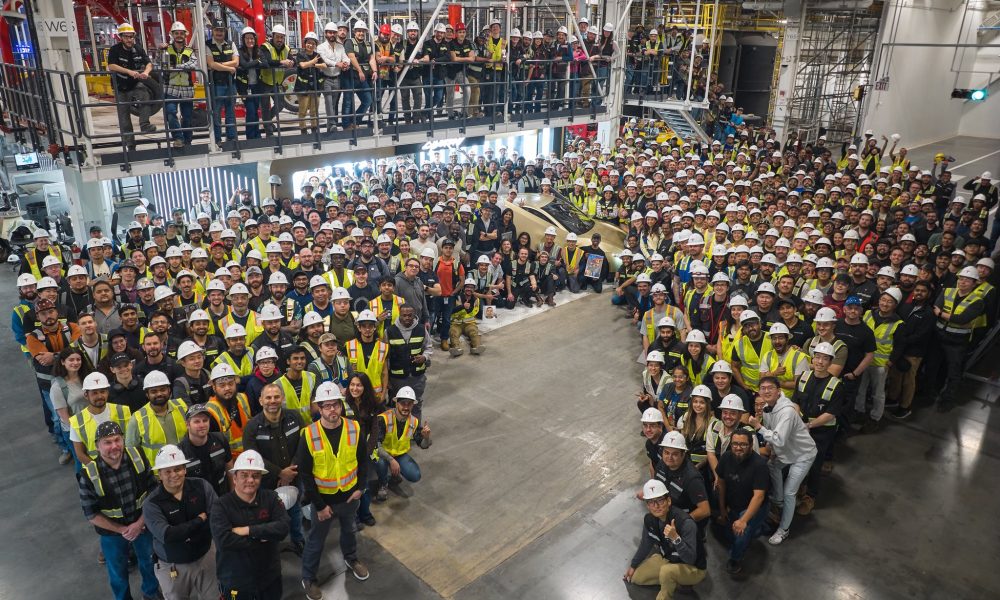
The first Tesla Cybercab has rolled off the assembly line. This isn't merely another vehicle launch; it is the opening salvo in a transportation revolution that promises to reshape cities, economies, and our very relationship with the automobile. Elon Musk's vision of a fully autonomous robotaxi network has moved from audacious concept to tangible hardware, setting the stage for a future where summoning a ride may become as instinctive as unlocking a smartphone—and where owning a car that sits idle 95% of the time may seem increasingly archaic.
The Cybercab's Promise: A New Era of Urban Mobility
The potential benefits of a scaled Tesla robotaxi network are profound. By providing cheaper, on-demand mobility, the service could drastically reduce the number of private vehicles clogging city streets. This unlocks a cascade of positive effects: reduced traffic congestion, the transformation of parking lots into public spaces, and significant environmental gains from optimizing electric vehicle utilization. The core promise is one of "mobility abundance"—a future where transportation is a seamless, affordable service, increasing accessibility for millions while contributing to cleaner, quieter, and more efficient urban centers.
The Human Cost: Navigating a Disrupted Landscape
This technological leap does not arrive without seismic disruption. The rise of autonomous ride-hailing directly threatens millions of jobs in taxi, rideshare, and delivery services globally. The displacement risk extends beyond drivers to encompass entire ancillary sectors, from auto insurance and repair to parking enforcement. This forces a critical societal question: will the broad benefits of AI-driven autonomy outweigh the significant human and economic costs of transition? The answer will depend heavily on policy, retraining initiatives, and the pace at which new industries emerge to replace those made obsolete.
For Tesla, the Cybercab represents a dual-path strategy of immense financial ambition. It aims to create a new, high-margin revenue stream from the robotaxi service itself while simultaneously proving the unparalleled value of its Full Self-Driving (FSD) software suite. Success would transform Tesla from an automotive manufacturer into a vertically integrated mobility platform, with its fleet assets working around the clock. However, this hinges on achieving true, regulatory-approved Level 4 or 5 autonomy—a hurdle that has defied the industry for years.
What This Means for Tesla Owners and Investors
The implications are immediate and far-reaching. Tesla owners may soon have the option to enroll their compatible vehicles in the "Tesla Network," turning their car into a revenue-generating asset during idle hours. For investors, the Cybercab shifts the valuation model. The potential lies not in selling 3-5 million cars annually, but in deploying a global fleet of tens of millions of autonomous units, each generating continuous service revenue. This amplifies both the upside opportunity and the execution risk, making regulatory approval and flawless technological deployment more critical than ever.
The journey from production start to ubiquitous service remains long, fraught with technical, regulatory, and societal challenges. Yet, with the first Cybercab built, the direction is set. The age of the private car as a default status symbol is being challenged by the algorithmically efficient, electrically powered, and autonomously driven pod. The road ahead will be bumpy, but the destination is nothing short of a reimagined world in motion.