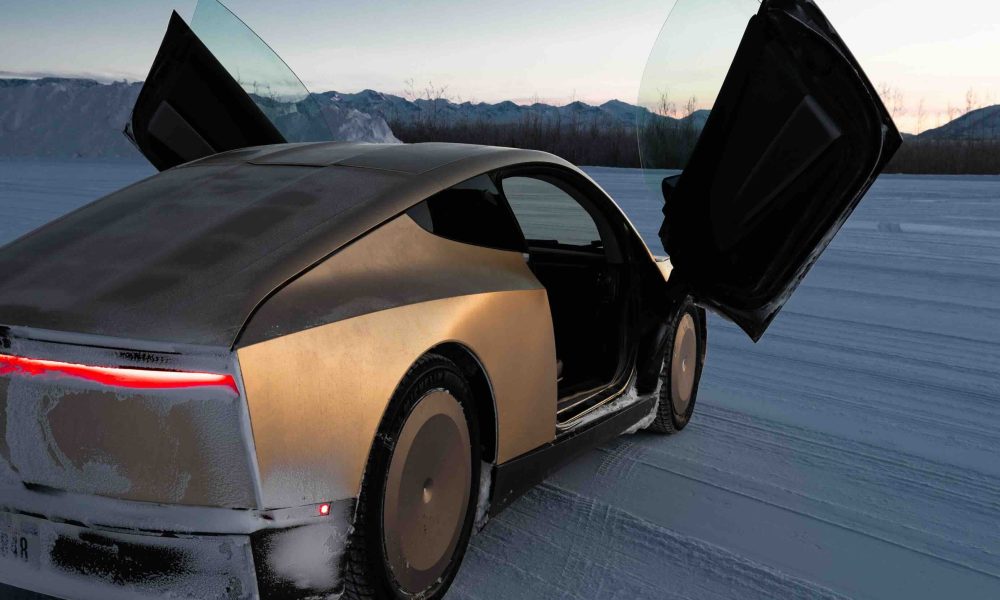
Newly surfaced images of what appears to be a production-ready Tesla Cybercab have electrified the EV community, offering the most detailed look yet at the radical interior of this autonomous two-seater. Shared across social media platform X, the photos and videos reveal a cabin stripped of traditional controls, centered instead on a futuristic, driver-centric display that hints at the final form of Tesla's robotaxi vision.
A Cockpit Reimagined for Autonomy
Gone is the conventional steering wheel and instrument cluster. In their place, a prominent, Yoke-style steering controller sits flush against a sweeping dashboard dominated by a large central screen. This setup confirms the vehicle's core premise: it is built from the ground up for Full Self-Driving (FSD) operation. The minimalist aesthetic extends throughout, with sparse physical buttons and an airy, open feel accentuated by a panoramic glass roof, challenging every preconception of a traditional electric vehicle cabin.
The Centerpiece: An Interactive "Wizardry" Display
The interior's true wizardry lies in its interactive display. The screen appears to be the primary, if not sole, interface for passengers, likely managing climate, entertainment, trip routing, and vehicle status. This design underscores a massive bet on the reliability of Tesla's autonomous software; with no manual driving controls to fall back on, the Cybercab's functionality is inextricably linked to the performance of FSD. The clean, almost sparse cabin suggests Tesla is prioritizing manufacturability and cost-effectiveness for a fleet vehicle, while using technology to deliver the user experience.
Contextually, this leak arrives at a pivotal moment. Tesla CEO Elon Musk has slated the official unveiling of the dedicated robotaxi for August 8, 2024. These images serve as a powerful teaser, validating that the project has moved far beyond a concept and into a tangible production phase. The design choices seen here—the two-seat configuration, the lack of pedals, the single screen—are not mere styling exercises but deliberate engineering decisions aimed at optimizing for a shared, on-demand mobility service.
Implications for the Tesla Ecosystem
For Tesla owners and investors, the visible progress on the Cybercab is a double-edged signal. It demonstrates tangible execution on a high-stakes, futuristic product line that could unlock the immense financial potential of the Tesla Network. A successful robotaxi fleet represents a recurring revenue stream that dwarfs traditional car sales. However, it also heightens the stakes for Tesla's software team. The vehicle's entire value proposition is predicated on flawless, regulatory-approved autonomy. Any significant delays or setbacks in FSD development will directly ground the Cybercab before it can ever take flight. The reveal moves Tesla from an auto company to a mobility-as-a-service aspirant, a transition that will define its next decade.