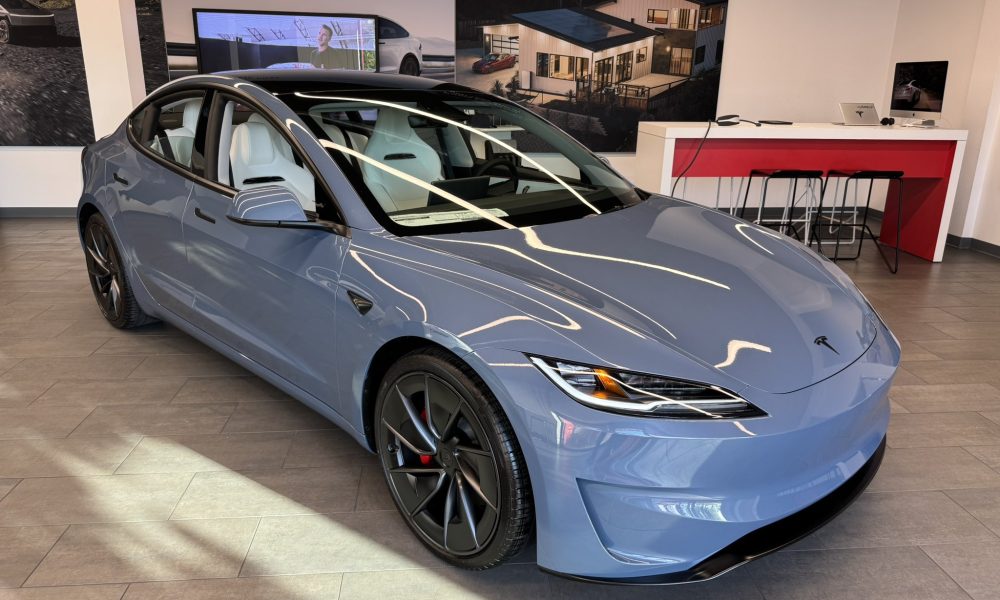
While the automotive industry often measures progress in new model years, Tesla continues to redefine the vehicle lifecycle through its over-the-air (OTA) software updates. The latest deployment, 2026.2.9, rolling out from March 1, 2026, is not merely an incremental patch but a foundational shift, introducing a suite of features that significantly alters the user experience and repositions the company's most famous—and controversial—technology. This update, available for Model Y, Model 3, Model S, and Model X equipped with both Hardware 3 and Hardware 4, signals a new chapter in Tesla's software-driven vision.
A New Name, A New Ambition: The Shift from FSD
The most headline-grabbing change in this OTA update is the official renaming of Full Self-Driving (FSD). Moving away from a term that drew regulatory scrutiny and set arguably unrealistic public expectations, Tesla has rebranded the system to reflect a more nuanced, capability-based approach. This isn't just cosmetic; it accompanies a refined operational logic that emphasizes collaborative driving. The system now provides more explicit communication about its intended actions and environmental limitations, aiming to build clearer trust between driver and machine. This strategic pivot addresses long-standing criticism while methodically advancing the core autonomy algorithms.
Beyond Autonomy: Elevating the Daily Drive
The 2026.2.9 update extends its reach far beyond the autonomy suite, delivering tangible enhancements to daily usability. A comprehensive visual refresh has been applied to the media player and climate control interfaces, prioritizing frequently used functions with a cleaner, more intuitive layout. Energy consumption analytics have received a major upgrade, now offering hyper-granular, trip-specific breakdowns that factor in topography, climate system use, and even wheel configuration. Furthermore, a new "Guardian Mode" leverages the existing sensor suite for enhanced perimeter monitoring when parked, providing detailed alerts of activity around the vehicle beyond simple sentry recordings.
For the connected Tesla ecosystem, the update deepens smartphone integration. The mobile app now allows for customized automation sequences—imagine a single command that simultaneously preconditions the cabin, opens the garage door, and sets a navigation route based on your morning calendar. This level of seamless integration underscores Tesla's view of the electric vehicle as a hub for personal technology. These collective refinements demonstrate a maturation in Tesla's software philosophy, where polish and practical utility are now given weight equal to headline-grabbing autonomy features.
The implications of this coordinated rollout are significant for all stakeholders. For Tesla owners, particularly those with older Hardware 3 vehicles, the update reaffirms the value of their initial investment, delivering a substantially refreshed experience years after purchase. It enhances safety through improved driver-assist communication and expands vehicle utility, directly impacting satisfaction and brand loyalty. For investors, the rebranding and refinement of the autonomy stack represent a de-risking maneuver, potentially smoothing the path for wider regulatory approval and market adoption. This update proves that Tesla's most potent competitive moat—its ability to transform every car on the road overnight—is only growing wider.