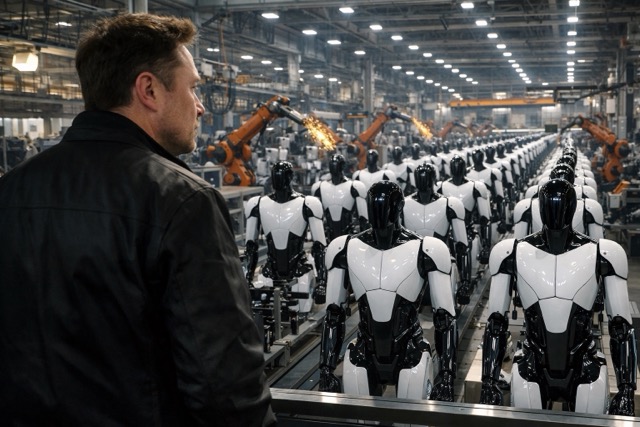
In a bold declaration that blurs the lines between automotive manufacturing and the frontier of artificial intelligence, Elon Musk has posited that Tesla is uniquely positioned to achieve a historic breakthrough. The CEO suggested on his social media platform, X, that Tesla could be the first entity to create Artificial General Intelligence (AGI)—a form of AI with human-like cognitive abilities—and, critically, to embody it within a humanoid robot. This statement reframes Tesla's ambitious Optimus project not merely as a venture into robotics, but as a potential vessel for the most advanced AI on the planet.
From Autopilot to Autonomous Being: Tesla's AGI Pathway
Musk's claim is not made in a vacuum; it is deeply rooted in Tesla's existing technological stack. The company's pursuit of full self-driving (FSD) software is, in essence, a narrow form of artificial intelligence that must perceive and interact with a complex, unstructured world. The leap to AGI would involve scaling this intelligence to generalize across countless domains beyond driving. Tesla's advantage, as per this vision, lies in its real-world data engine—the billions of miles of video and sensor data collected from its global fleet. This unparalleled dataset is the training ground for neural networks that could form the foundation for a more generalized intelligence, which could then be transferred to the Optimus platform.
The Optimus Project: More Than a Factory Robot
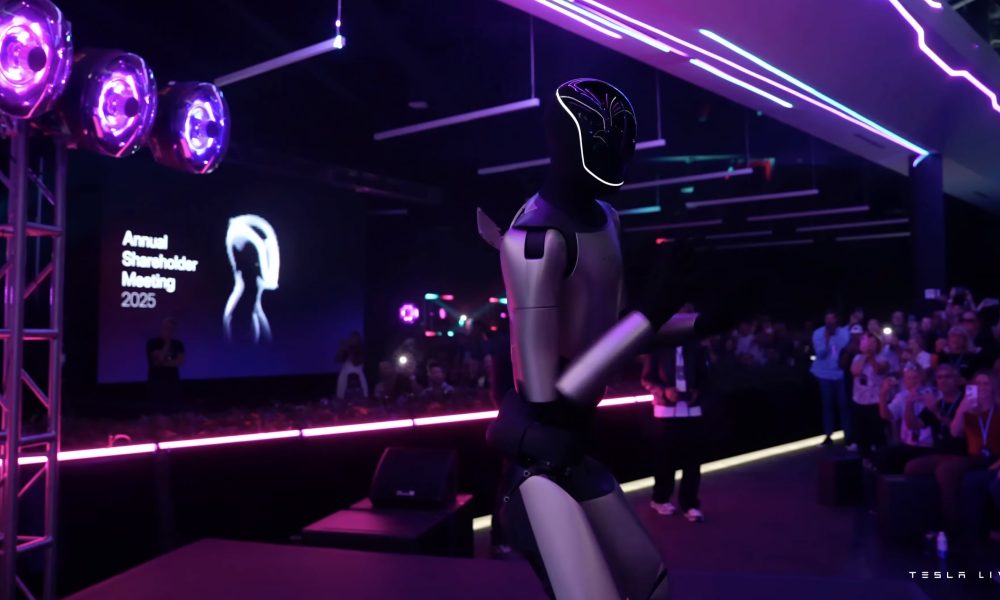
While initially presented as a solution for dangerous, repetitive, or boring tasks in manufacturing and logistics, the Tesla Bot Optimus now carries a far heavier conceptual burden. Musk's latest comments elevate it from a sophisticated automaton to a potential physical avatar for AGI. The humanoid form factor is key, as it is designed to operate in environments built for humans. Success would mean creating a machine that can understand and execute a near-infinite variety of commands in the real world, from "assemble this car" to "manage a complex warehouse inventory" or even "care for an elderly person." The integration of Tesla's AI software with advanced actuators and sensors is the monumental engineering challenge at hand.
This vision faces immense skepticism from the AI research community, where many experts believe AGI remains decades away. Furthermore, Tesla is competing with well-funded, dedicated AI labs like OpenAI, Google DeepMind, and others solely focused on the software aspect of intelligence. Tesla's unconventional approach—using real-world physical data and tying AGI to a commercial robotics product—is a high-risk, high-reward strategy. It bets that embodiment and practical utility are not just byproducts of AGI, but essential pathways to creating it.
For Tesla owners and investors, the implications are profound and dual-faceted. In the near term, advancements made for Optimus and AGI research will likely accelerate improvements in Tesla's core products, particularly Full Self-Driving capabilities and vehicle AI. The data synergy is a powerful feedback loop. Long-term, if Tesla were to even partially succeed, it would transcend the automotive and energy sectors entirely, unlocking a market for intelligent robotics that could dwarf its current valuation. However, this ambitious pivot also demands colossal R&D investment and carries significant execution risk, reminding stakeholders that Tesla's trajectory is firmly hitched to Musk's most visionary and disruptive aspirations.