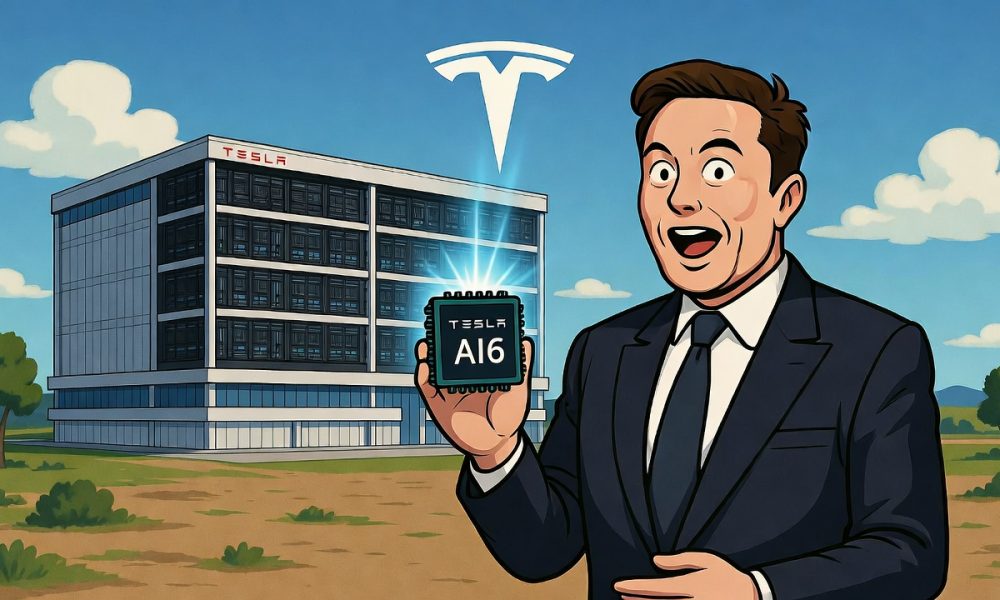
In the high-stakes race for autonomous driving supremacy, Tesla's silicon strategy is accelerating at a blistering pace. CEO Elon Musk has set ambitious new expectations for the company's next-generation self-driving computer, teasing a surprisingly aggressive timeline for the AI6 chip. This move signals a profound commitment to vertical integration, positioning Tesla not just as an automaker, but as a leader in specialized artificial intelligence hardware designed to unlock the full potential of its Full Self-Driving (FSD) software.
Musk's Aggressive Timeline for Next-Gen Silicon
While specific details remain under wraps, Musk indicated that the tape-out for the AI6 hardware is targeted for the fall of 2025. The tape-out phase is a critical milestone where the chip's design is finalized and sent for fabrication. This timeline, coming relatively quickly after the deployment of the current Hardware 4 (HW4) suite, demonstrates Tesla's intention to iterate its proprietary silicon at a pace that mirrors software development cycles rather than traditional automotive hardware cycles. It underscores a core philosophy: maximum control over the entire autonomy stack to eliminate bottlenecks and optimize performance.
The Strategic Imperative Behind Vertical Integration
Tesla's push into custom chip design began with the Hardware 3 computer and its FSD Chip, which provided a massive performance leap over previous, supplier-based solutions. By developing AI6 in-house, Tesla can tailor every transistor to the exact needs of its neural networks, processing the unique data streams from its camera-based vision system with unparalleled efficiency. This vertical integration is a strategic moat. It allows Tesla to avoid reliance on third-party semiconductor roadmaps, reduces costs at scale, and, most importantly, creates a feedback loop where its real-world fleet data directly informs the design of more powerful and specialized hardware.
The progression to AI6 is expected to deliver exponential gains in processing power and neural network inference speed. This is not merely an incremental upgrade; it is the hardware foundation for future, more complex versions of FSD that approach and eventually achieve generalized autonomy. Each generational leap in silicon brings the company closer to realizing its vision of a scalable robotaxi network, where the vehicle's ability to perceive and react safely in all scenarios is paramount. The chip is the engine for that ambition.
Implications for Owners and the Investment Thesis
For current and prospective Tesla owners, this rapid hardware evolution presents both excitement and practical considerations. It reinforces that Tesla vehicles are designed to be upgraded and improved long after purchase, primarily through software. However, it also highlights the possibility of hardware obsolescence for older models, as advanced FSD capabilities may eventually require the processing muscle of newer computers like AI6. For investors, the development is a clear signal of Tesla's long-term differentiation. Success in this endeavor would solidify its lead in EV autonomy, creating recurring software revenue streams and potentially unlocking the immense value of the robotaxi ecosystem, making the company's fortunes less tied to the cyclical margins of vehicle manufacturing alone.