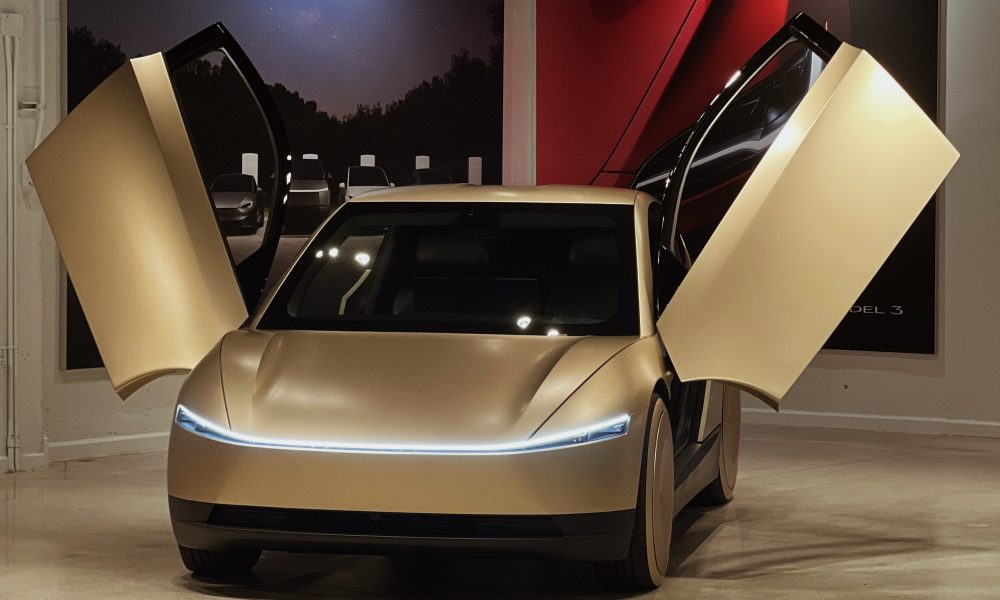
In the high-stakes race to dominate the autonomous future, operational cost isn't just a metric—it's the entire battlefield. Elon Musk has now dropped a tantalizing new data point that underscores Tesla's ambition to not only win the robotaxi war but to redefine the very economics of transportation. Following a recent ARK Invest analysis on robotaxi costs, Musk revealed that the Tesla Cybercab is being engineered for staggering efficiency, potentially making it the most affordable vehicle to operate, mile-for-mile, ever conceived.
The Stunning Math Behind the Machine
ARK Invest's report laid the groundwork, suggesting a fully autonomous electric vehicle could achieve an incremental cost per mile as low as $0.25. Musk's comment, however, hinted that Tesla is targeting a figure even more aggressive. This target hinges on the Cybercab's radical design philosophy: extreme aerodynamic efficiency, a minimalist interior built for durability over luxury, and the relentless cost-down engineering of Tesla's next-generation powertrain and battery technology. The goal is to slash energy consumption and maintenance costs to levels that make traditional car ownership, and even current ride-hailing, seem prohibitively expensive by comparison.
More Than Just an EV—A Mobility Platform
This pursuit of ultra-low operational cost transforms the Cybercab from a mere vehicle into a high-utilization asset. Unlike a personal EV that sits idle 95% of the day, a robotaxi in a continuous fleet service must be profitable across hundreds of thousands of miles. Every fraction of a cent saved per mile cascades into monumental savings at scale. This efficiency is the key that unlocks the promised Robotaxi network's profitability, enabling cheaper fares for consumers while maintaining robust margins for Tesla and fleet operators. It directly attacks the core cost drivers of today's mobility services: the driver and the vehicle's upkeep.
The implications of this engineering focus extend far beyond the balance sheet. A fleet of supremely efficient Cybercabs would exert significantly less demand on the electrical grid per passenger mile, alleviating one of the major concerns about a fully electrified transport system. Furthermore, it strengthens Tesla's ecosystem play; cheaper operational costs make subscribing to the Tesla network as a car owner more appealing, accelerating the adoption loop for its Full Self-Driving software and services.
For Tesla owners and investors, this detail is a critical signal. It confirms that the company's strategy is deeply integrated, where advancements in battery tech, AI, and vehicle design all converge to create an insurmountable economic moat. If Tesla delivers on this efficiency promise, the Cybercab won't just be another product launch—it will be the deployment of a fundamentally superior and cheaper mobility platform. The financial upside for Tesla shifts from one-time car sales to capturing a continuous, high-margin revenue stream from every mile its global fleet travels, potentially justifying the company's massive investments in autonomy and redefining its valuation model for the next decade.