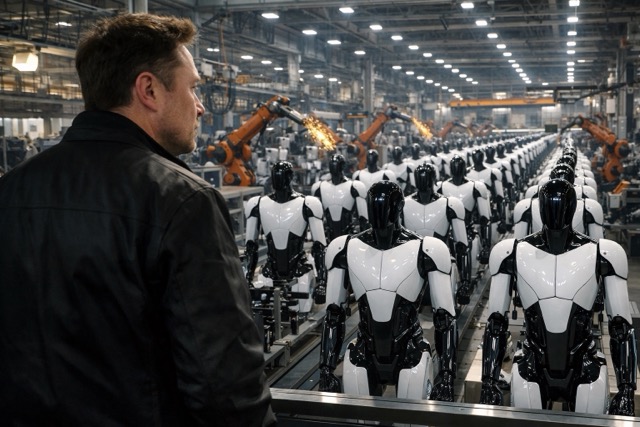
In a characteristically bold update, Tesla CEO Elon Musk has announced that the company is in the final stages of completing the next generation of its humanoid robot, signaling a major acceleration in a project many still view as science fiction. Musk declared that Optimus Gen 3 is nearly finished, describing it as one of the world's most advanced humanoid robots. This unexpected progress report suggests Tesla's robotics division is moving with a velocity that could reshape both the company's long-term valuation and the automation landscape.
From Prototype to "Final Stages" of Production
The leap from the bipedal prototypes demonstrated in 2022 and 2023 to a production-ready Gen 3 model is monumental. Earlier versions, while impressive proofs of concept, were clearly development platforms. Musk's latest statement implies that core challenges in mobility, balance, and manipulation have been solved to a degree that allows for finalized manufacturing design. This phase focuses on hardening the hardware for reliability, sourcing components at scale, and finalizing the assembly process—a stark contrast to the one-off nature of previous builds.
The "Most Advanced" Claim and the Competitive Landscape
By branding Optimus Gen 3 as a top-tier advanced humanoid, Musk is directly challenging established players like Boston Dynamics and a growing field of startups. Tesla's key differentiator lies in its approach: leveraging its expertise in AI, batteries, and actuators from its electric vehicle program. The robot is expected to utilize the same Full Self-Driving (FSD) computer and neural net learning for real-world navigation and task execution. This synergy could give Tesla a unique advantage in creating a "useful general purpose" robot capable of adapting to diverse, unstructured environments, from factory floors to homes.
The implications of a viable, mass-produced humanoid robot extend far beyond a novel product line. For Tesla, Optimus represents a potential market orders of magnitude larger than the automotive sector. A successful rollout would pivot Tesla from an EV and energy company to a leader in general-purpose robotics and AI. However, significant hurdles remain, including proving real-world utility, achieving competitive cost targets, and navigating uncharted regulatory waters for autonomous machines in human spaces.
Implications for Tesla's Trajectory and Stakeholders
For investors, Optimus is the ultimate "moonshot" that could justify Tesla's premium valuation, but it also introduces new layers of execution risk and capital allocation questions. For Tesla owners and enthusiasts, the rapid development underscores the company's core identity as a disruptive technology firm, not just a carmaker. The advancements in actuators and AI developed for Optimus may also filter back to enhance future vehicle features. While a commercial product is likely still years away, Musk's update confirms that what was once a distant vision is now on Tesla's immediate engineering roadmap, demanding the market's serious attention.