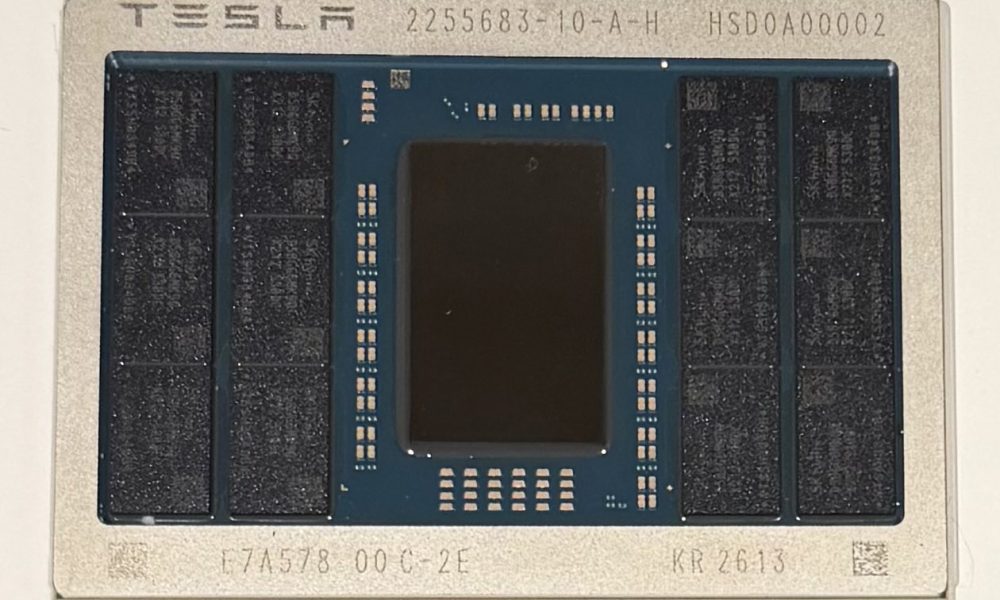
In a move that signals the next major leap in its autonomous and robotics ambitions, Tesla has finalized the design of its next-generation AI5 chip. The announcement, made by CEO Elon Musk on his social media platform, came with a characteristically bold claim: the new hardware will deliver such a monumental performance increase that it will render previous generations obsolete for the company's most advanced AI workloads. This development is far more than a simple spec bump; it is the foundational bedrock upon which Tesla's future as an AI and robotics company is being built.
From Co-Design to Quantum Leap
Tesla's philosophy has always centered on software-hardware co-design, a meticulous process of engineering its neural networks and the silicon that runs them in tandem for optimal efficiency. This approach allowed its current Full Self-Driving (FSD) computer to achieve remarkable performance within strict power and thermal constraints. Musk's latest statement, however, suggests a paradigm shift. The performance delta with AI5 is framed not as an incremental step, but as a "quantum leap" so significant that upgrading from older hardware will become a necessity to access the full capabilities of future Robotaxi and Optimus humanoid robot software. This implies a fundamental architectural advance that older silicon simply cannot accommodate.
Optimized for the Edge: The Dual Frontier of AI5
While specific technical specifications remain undisclosed, Musk has previously clarified that AI5 is being optimized specifically for edge inference. This means the chip is designed to process vast amounts of sensor data and execute complex AI decisions in real-time, locally within the vehicle or robot, without relying on cloud connectivity. This capability is non-negotiable for the safety and latency requirements of autonomous driving and precise robotic movement. The chip's architecture is being crafted to serve two master platforms simultaneously: the Robotaxi, which demands ultra-reliable, continuous environmental analysis, and Optimus, which requires an entirely different set of processing for spatial reasoning and delicate physical interaction.
The finalization of the design is a critical milestone that triggers the lengthy process of fabrication, testing, and integration. It confirms that Tesla's in-house silicon team, led by Pete Bannon, has locked in the transistor-level blueprint that will be sent to a foundry like TSMC. This move solidifies Tesla's independence from generic automotive chip suppliers and gives it total control over its AI destiny. The company is now betting its autonomous future on a piece of silicon that doesn't yet physically exist, underscoring the immense confidence Musk has in his team's design.
For Tesla owners and investors, the implications are profound. Current owners of vehicles with older Hardware 3.0 (HW3) may face a significant hardware upgrade wall to access the "true" autonomous driving features enabled by AI5, potentially impacting resale values and upgrade costs. Investors should view this as a massive capital-intensive bet on vertical integration, where success could create an insurmountable AI moat around Tesla's core products. However, it also introduces execution risk, as any delays or flaws in the chip's production or performance could cascade into setbacks for the entire Robotaxi and Optimus roadmap. The finalization of AI5 isn't just a tech update; it's the point of no return for Tesla's transformation from an electric vehicle maker to an AI robotics powerhouse.